ChipApex | Global Electronic Components Supplier
SEARCH
Search Product
Search Post
— IC芯片 | 连接器 | 传感器 | 被动器件 —
Search productSearch post
— IC芯片 | 连接器 | 传感器 | 被动器件 —
Consult the customer manager about the wholesale price.
consultation hotline:86-132-6715-2157
email:[email protected]
Contact the product manager for consultation. One-stop consultation is available.
Do you want a lower wholesale price? Please send us your inquiry and we will reply immediately.
The LTC4364CDE-2#PBF is a board-mount surge stopper with an integrated ideal diode controller, manufactured by Analog Devices Inc. It operates within a voltage range of 4 VDC to 80 VDC and features a DFN-14 surface mount package measuring 4 mm in length, 3 mm in width, and 0.75 mm in height. The device supports a maximum operating temperature of +70°C and a minimum of 0°C. It includes reverse input protection up to -40V and reverse output protection up to -20V. The component utilizes an external N-channel MOSFET for surge suppression and ideal diode functionality, with a standby current of 10μA at 12V.
Verify the specific suffix CDE indicates commercial temperature range (0°C to 70°C) and -2 denotes automatic retry behavior. Confirm the DFN-14 package dimensions match design constraints. Ensure compatibility with external N-channel MOSFET selection for optimal performance. Check RoHS compliance status through official documentation before finalizing procurement orders.
Select this model when automatic recovery after fault conditions is required rather than latched shutdown. Choose based on the 4V to 80V operating window and commercial temperature limits. Consider the DFN-14 footprint for space-constrained designs. Evaluate external MOSFET requirements for current handling and thermal management alongside the internal controller capabilities.
This component belongs to the LTC4364 Surge Stopper series, which combines surge suppression with ideal diode functionality. The series includes variants with different temperature ranges and fault response modes. The CDE suffix specifies commercial grade operation, while the -2 suffix defines the automatic retry characteristic, distinguishing it from latched-off alternatives.
LTC4364CDE-1#PBF offers identical electrical specifications but features a latched-off fault response instead of automatic retry. LTC4364HDE-2#PBF provides the same automatic retry function but extends the operating temperature range to industrial levels (-40°C to 125°C). Verify fault handling requirements when substituting.
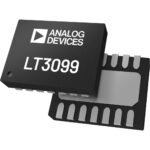 LTC4364CDE-2#PBF
The activity of extra discounts on wholesale prices is in full swing…
Please fill in your contact information and we will send you the latest wholesale price list.