ChipApex | Global Electronic Components Supplier
SEARCH
Search Product
Search Post
— IC芯片 | 连接器 | 传感器 | 被动器件 —
Search productSearch post
— IC芯片 | 连接器 | 传感器 | 被动器件 —
Consult the customer manager about the wholesale price.
consultation hotline:86-132-6715-2157
email:[email protected]
Contact the product manager for consultation. One-stop consultation is available.
Do you want a lower wholesale price? Please send us your inquiry and we will reply immediately.
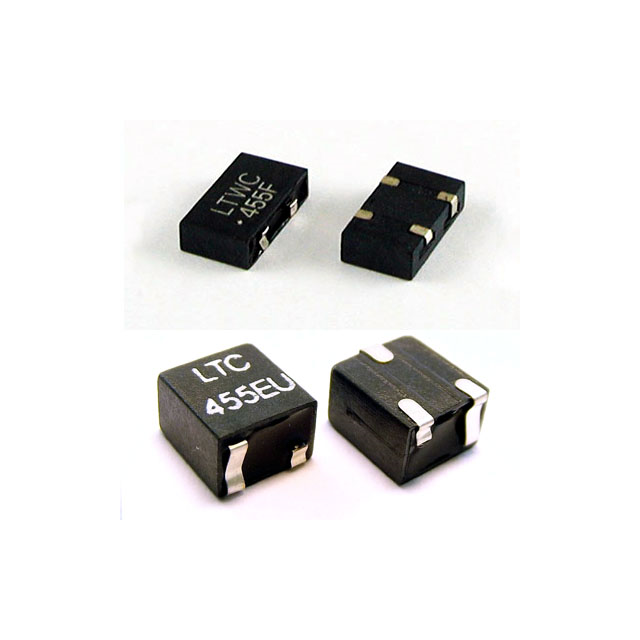
The LTC455GU-TR is a ceramic filter manufactured by Transko Electronics, Inc., designed for AM radio receiver applications. It features a center frequency of 455kHz and a minimum bandwidth of 4.5kHz at the 6dB point. The component provides selective frequency filtering with an impedance of 1.5kOhm. It utilizes a 3-SMD, J-Lead package configuration to facilitate surface-mount integration into electronic circuits.
Verify the specific ordering suffix TR indicates tape and reel packaging when sourcing components. Confirm that the 1.5kOhm impedance specification matches the target circuit design requirements. Ensure compatibility with the 3-SMD J-Lead footprint during PCB layout validation. Cross-reference the manufacturer datasheet for any recent specification updates or revisions before final procurement decisions.
Select this component based on its specific 455kHz center frequency requirement for AM broadcast band applications. Evaluate the 4.5kHz minimum bandwidth capability against the desired audio fidelity and adjacent channel rejection needs. Consider the surface-mount J-Lead form factor for automated assembly processes. Verify impedance matching with preceding and following stages to ensure optimal signal transfer efficiency.
This part belongs to the family of ceramic filters produced by Transko Electronics, Inc., specifically engineered for intermediate frequency applications. It shares functional similarities with other models like the LTC455DU-TR but differs in package type and specific electrical tolerances. These components are standard solutions for maintaining signal integrity in analog radio reception systems requiring precise frequency discrimination.
The LTM455GU is a documented substitute within the same manufacturer's portfolio, featuring a 4-pin configuration instead of the 3-SMD J-Lead format. Direct pin-to-pin replacement is not guaranteed due to the package difference; adapter boards or redesign may be necessary. Verify electrical parameters match exactly before substituting.
 LTC455GU-TR
The activity of extra discounts on wholesale prices is in full swing…
Please fill in your contact information and we will send you the latest wholesale price list.