 ChipApex | Global Electronic Components Supplier
SEARCH
Search Product
Search Post
— IC芯片 | 连接器 | 传感器 | 被动器件 —
Search productSearch post
— IC芯片 | 连接器 | 传感器 | 被动器件 —
Consult the customer manager about the wholesale price.
consultation hotline:86-132-6715-2157
email:[email protected]
Contact the product manager for consultation. One-stop consultation is available.
Do you want a lower wholesale price? Please send us your inquiry and we will reply immediately.
The LTC6561HUF#TRPBF is a four-channel multiplexed transimpedance amplifier with output multiplexing capability. It features a 220MHz -3dB bandwidth and 74kΩ transimpedance gain. The device operates on a single 5V supply, consuming 200mW power dissipation for all channels. Input current noise density is 4.8pA/√Hz at 200MHz with 2pF input capacitance. The linear input range extends from 0µA to 30µA, supporting overload currents exceeding ±400mA peak. It utilizes a 4mm × 4mm 24-lead QFN package.
Verify the specific suffix #TRPBF indicates tape and reel packaging rather than tube. Confirm the H grade corresponds to the extended temperature range of –40°C to 125°C. Ensure the ordering information matches the required automotive or industrial qualification standards if applicable. Cross-reference the manufacturer part number with official Analog Devices documentation to validate availability and revision status.
Select this component when designing multi-channel optical receiver front-ends requiring compact integration. The internal multiplexer reduces board space compared to discrete TIA arrays. Consider the 220MHz bandwidth limit relative to the target APD capacitance. Evaluate the 74kΩ gain against the expected signal amplitude and dynamic range requirements of the photodiode array.
This device belongs to the LTC6561 family of four-channel transimpedance amplifiers. It is designed specifically for high-speed optical detection where low noise and fast recovery are critical. The HUF variant denotes the plastic QFN package with the extended industrial temperature rating. It serves as a core building block for scalable LIDAR and imaging sensor arrays.
Public confirmed substitute part numbers: LTC6561IUF#TRPBF (Industrial Temperature Grade).
The O_MUX pin controls the output multiplexer. When low, the output is enabled; when high, all inputs are decoupled from the output. It allows multiple LTC6561 devices to be combined by enabling only one device's output at a time.
The amplifier can survive overload currents greater than ±400mA peak. It recovers from 1mA saturation events in less than 12ns without phase reversal.
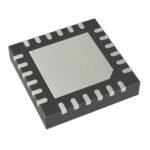 LTC6561HUF#TRPBF
The activity of extra discounts on wholesale prices is in full swing…
Please fill in your contact information and we will send you the latest wholesale price list.







