ChipApex | Global Electronic Components Supplier

SEARCH
Search Product
Search Post
— IC芯片 | 连接器 | 传感器 | 被动器件 —
Search productSearch post
— IC芯片 | 连接器 | 传感器 | 被动器件 —
Consult the customer manager about the wholesale price.
consultation hotline:86-132-6715-2157
email:[email protected]
Contact the product manager for consultation. One-stop consultation is available.
Do you want a lower wholesale price? Please send us your inquiry and we will reply immediately.
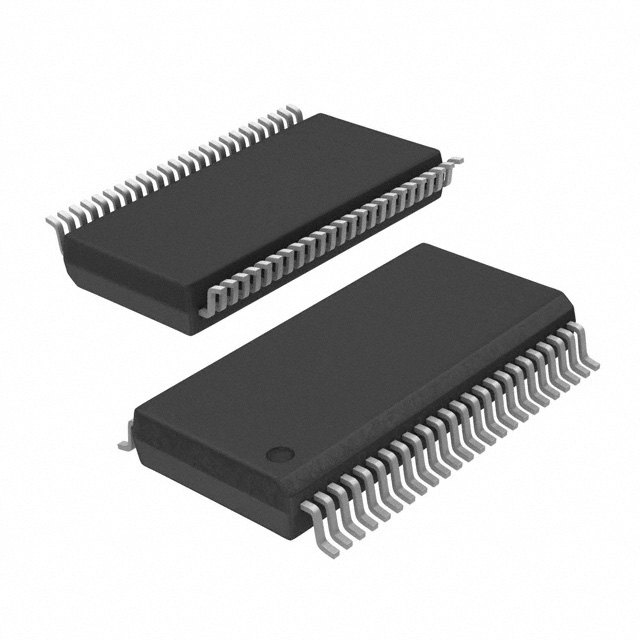
The LTC6811HG-2#TRPBF is a 12-channel multicell battery stack monitor manufactured by Analog Devices Inc. It measures up to 12 series-connected cells with a maximum total measurement error of 1.2mV and a cell voltage range of 0V to 5V. The device features an isoSPI interface for high-speed, RF-immune communication over twisted pair cables up to 100 meters. It supports daisy-chain or parallel addressing architectures, includes passive cell balancing with programmable timers, and operates within a supply voltage range of 11V to 55V. The component is housed in a 48-pin SSOP package and is rated for automotive applications.
Verify the specific suffix HG-2 against official Analog Devices documentation to confirm it denotes the addressable variant compatible with parallel host connections. Ensure the order matches the required RoHS compliance status and automotive qualification standards. Confirm package type and reel specifications align with manufacturing requirements before finalizing procurement.
Select this component when designing systems requiring precise monitoring of large battery stacks with minimal wiring complexity. The isoSPI interface reduces pin count compared to traditional SPI solutions. Consider the passive balancing capabilities if thermal management of active balancing circuits is a constraint. Verify that the operating temperature range meets the environmental conditions of the target application.
This part belongs to the LTC6811 family of battery monitors from Analog Devices. It serves as an upgrade path from earlier generations like the LTC6804, offering increased channel density and improved accuracy. The family is designed for safety-critical applications, with variants supporting ISO 26262 compliance. It integrates directly with host processors via isolated serial interfaces.
LTC6811IG-1#PBF is a documented related device within the same family, though it utilizes a daisy-chain architecture rather than the addressable parallel configuration of the -2 variant. Direct substitution requires verifying the system's communication topology compatibility.
 LTC6811HG-2#TRPBF

The activity of extra discounts on wholesale prices is in full swing…
Please fill in your contact information and we will send you the latest wholesale price list.