 ChipApex | Global Electronic Components Supplier
SEARCH
Search Product
Search Post
— IC芯片 | 连接器 | 传感器 | 被动器件 —
Search productSearch post
— IC芯片 | 连接器 | 传感器 | 被动器件 —
Consult the customer manager about the wholesale price.
consultation hotline:86-132-6715-2157
email:[email protected]
Contact the product manager for consultation. One-stop consultation is available.
Do you want a lower wholesale price? Please send us your inquiry and we will reply immediately.
The LTC6994CS6-1#TRPBF is a programmable delay block from the TimerBlox family, housed in a 6-lead Plastic TSOT-23 package. It operates on a single supply voltage ranging from 2.25V to 5.5V with a specified operating temperature range of 0°C to 70°C. The device provides a programmable delay range from 1µs to 33.6 seconds, determined by an internal master oscillator and a divider ratio (NDIV) selectable from 1 to 221 via the DIV pin. A single resistor (RSET) connected between the SET pin and ground programs the time base. The LTC6994-1 variant delays either the rising or falling edge based on configuration, featuring a CMOS output driver capable of sourcing and sinking 20mA.
Verify the specific suffix #TRPBF indicates tape and reel packaging when ordering. Confirm the CS6 designation corresponds to the commercial temperature grade (0°C to 70°C) and TSOT-23 package. Ensure compatibility with the required delay range and supply voltage specifications for the target application environment before finalizing procurement.
Select the LTC6994-1 version if only one edge transition requires delaying. Choose the -2 version if both edges must be delayed or output inversion is needed. Use the DIV pin resistor network to set the desired divider ratio and polarity. Ensure RSET tolerance meets accuracy requirements, as delay precision depends heavily on resistor stability and temperature coefficient.
This component belongs to the Analog Devices TimerBlox family of versatile silicon timing devices. The LTC6994 series includes variants with different packages and temperature grades, such as DFN and wider industrial automotive options. The CS6-1 suffix specifically identifies the commercial grade TSOT-23 package with single-edge delay capability.
Direct substitutes within the same family include LTC6994IS6-1#TRPBF for extended temperature range or LTC6994HDCB-1#TRPBF for DFN packaging. Verify that any replacement maintains the same logic function (-1 vs -2) and package footprint to ensure board compatibility without redesign.
The delay time is programmed using a single resistor (RSET) connected between the SET pin and ground, which sets the master oscillator frequency, combined with a divider ratio (NDIV) selected via the DIV pin voltage.
The LTC6994-1 delays either the rising or falling edge based on configuration, while the LTC6994-2 delays both transitions and offers an optional output inversion feature.
Yes, the device allows dynamic adjustment of the delay time by varying the control voltage or current at the SET pin after start-up.
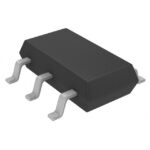 LTC6994CS6-1#TRPBF
The activity of extra discounts on wholesale prices is in full swing…
Please fill in your contact information and we will send you the latest wholesale price list.







