 ChipApex | Global Electronic Components Supplier
SEARCH
Search Product
Search Post
— IC芯片 | 连接器 | 传感器 | 被动器件 —
Search productSearch post
— IC芯片 | 连接器 | 传感器 | 被动器件 —
Consult the customer manager about the wholesale price.
consultation hotline:86-132-6715-2157
email:[email protected]
Contact the product manager for consultation. One-stop consultation is available.
Do you want a lower wholesale price? Please send us your inquiry and we will reply immediately.
The LTC6994MPS6-1#TRMPBF is a programmable delay block from the TimerBlox family, housed in a 6-lead Plastic TSOT-23 package. It provides a delay range of 1µs to 33.6 seconds, configured via a single resistor (RSET) and an internal clock divider (NDIV). The device operates on a single supply voltage between 2.25V and 5.5V with a typical supply current of 70µA at a 10µs delay. It features a CMOS output driver capable of sourcing and sinking 20mA. The component is qualified for automotive applications under AEC-Q100 standards and supports an extended operating temperature range from –55°C to 125°C.
Verify the specific MPS6 suffix indicates the military/extended grade variant with –55°C to 125°C operation. Confirm the -1 designation ensures single-edge delay functionality rather than dual-edge. Check for the #W suffix if automotive quality reports are required. Ensure the TRMPBF suffix matches the mini tape and reel packaging specification needed for assembly.
Select this model when an extended temperature range below –40°C is required for harsh environments. Use the -1 version if only one transition edge requires delaying. Configure the delay using RSET and DIV pin resistors to set the master oscillator and divider ratio. Ensure the output load does not exceed the 20mA drive capability without external limiting.
This component belongs to the Analog Devices TimerBlox family of silicon timing devices. It shares architectural similarities with the LTC6994-2, which delays both edges and offers inversion. The MPS6 package variant distinguishes it from standard industrial or commercial grades by its wider thermal operating window and automotive qualification status.
LTC6994IS6-1#TRMPBF: Industrial grade (-40°C to 85°C), same package and function.
The delay is determined by a master oscillator frequency set by a resistor on the SET pin and an internal clock divider ratio selected by the voltage on the DIV pin.
The -1 version delays either the rising or falling edge based on configuration, while the -2 version delays both transitions and can optionally invert the output.
Yes, the delay time can be dynamically adjusted by changing the control voltage on the SET pin or the divider code on the DIV pin.
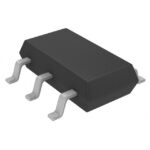 LTC6994MPS6-1#TRMPBF
The activity of extra discounts on wholesale prices is in full swing…
Please fill in your contact information and we will send you the latest wholesale price list.







