ChipApex | Global Electronic Components Supplier
SEARCH
Search Product
Search Post
— IC芯片 | 连接器 | 传感器 | 被动器件 —
Search productSearch post
— IC芯片 | 连接器 | 传感器 | 被动器件 —
Consult the customer manager about the wholesale price.
consultation hotline:86-132-6715-2157
email:[email protected]
Contact the product manager for consultation. One-stop consultation is available.
Do you want a lower wholesale price? Please send us your inquiry and we will reply immediately.
The LTC7862HFE#PBF is a high-efficiency synchronous step-down DC/DC controller manufactured by Analog Devices Inc. Designed for demanding environments, it operates with an input voltage range of 4V to 140V and supports dual-phase or dual-output configurations. The device utilizes a fixed 500kHz switching frequency to optimize component size while maintaining high efficiency. It features integrated current mode control, programmable soft start, and cycle-by-cycle current limiting. The component is housed in a 28-lead TSSOP package and is rated for operation across an extended temperature range from -40°C to +150°C, making it suitable for automotive, industrial, and avionics applications requiring robust power management.
Verify the specific suffix and package type against official Analog Devices documentation to ensure compatibility with design requirements. Confirm availability status directly with authorized distributors as supply constraints may apply. Cross-reference pinout and electrical specifications with the latest datasheet revision to avoid integration errors. Ensure proper handling procedures are followed due to surface-mount packaging sensitivity.
Select this controller for applications requiring high input voltages and efficient power conversion. Evaluate thermal performance and heat dissipation requirements given the operating temperature range. Consider external component selection for filtering and timing to match desired switching frequencies. Verify that the load requirements align with the controller's current capabilities and phase configuration options.
The LTC7862 belongs to Analog Devices' family of high-voltage synchronous buck controllers. It is designed to replace traditional linear regulators or less efficient switching solutions in high-voltage systems. The part integrates essential control logic and drivers, reducing external component count. It complements other PMIC offerings by providing scalable power solutions for complex electronic systems.
Check for direct pin-compatible alternatives within the same product family. Verify if upgraded versions or revised revisions offer improved thermal characteristics or additional features. Ensure that any substitute maintains the required input voltage range and switching frequency compatibility.
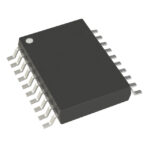 LTC7862HFE#PBF
The activity of extra discounts on wholesale prices is in full swing…
Please fill in your contact information and we will send you the latest wholesale price list.