ChipApex | Global Electronic Components Supplier

SEARCH
Search Product
Search Post
— IC芯片 | 连接器 | 传感器 | 被动器件 —
Search productSearch post
— IC芯片 | 连接器 | 传感器 | 被动器件 —
Consult the customer manager about the wholesale price.
consultation hotline:86-132-6715-2157
email:[email protected]
Contact the product manager for consultation. One-stop consultation is available.
Do you want a lower wholesale price? Please send us your inquiry and we will reply immediately.
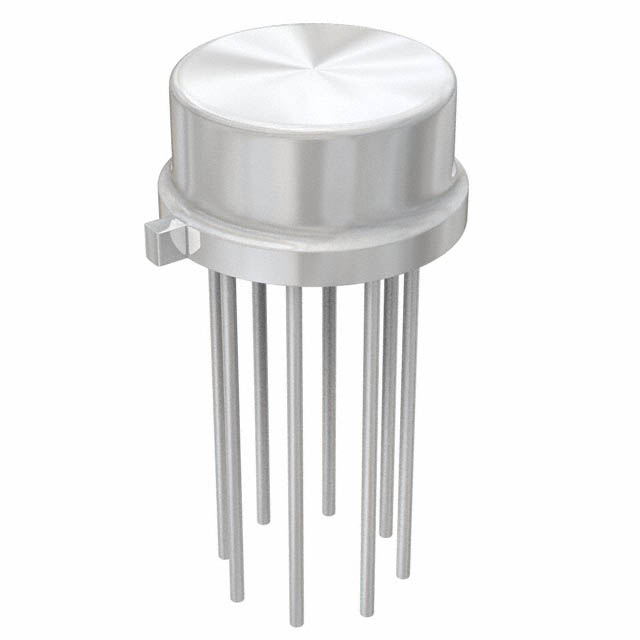
The LTZ1000ACH is an ultra-precision temperature-controlled voltage reference housed in an 8-lead TO-5 metal can. It provides a nominal 7V output with a typical temperature drift of 0.05ppm/°C and noise of 1.2µVP-P (0.1Hz to 10Hz). The device features long-term stability of 2µV/√kHr and includes an integrated heater resistor, subsurface zener, and temperature sensing transistor. The LTZ1000A variant utilizes a proprietary die attach method yielding a thermal resistance of 400°C/W, significantly reducing insulation requirements compared to the standard LTZ1000.
Verify that the specific part number matches the required thermal resistance specification. The LTZ1000ACH designation indicates the A-version with higher thermal resistance. Confirm package type is the 8-lead TO-5 metal can. Ensure external circuitry supports the necessary heater control and proper thermal layout management to achieve specified performance levels.
Select the LTZ1000ACH over the standard LTZ1000 when reduced insulation complexity is required due to its higher thermal resistance. Consider the need for external amplifier circuitry and careful PCB layout to mitigate thermocouple effects. Evaluate if the extreme precision justifies the design complexity compared to simpler references like the LT1021 or LM399A.
Manufactured by Analog Devices Inc. (formerly Linear Technology), this component belongs to the LTZ1000 family of ultra-stable references. It is designed for applications demanding superior performance compared to older devices like the LM199. The device requires external components to set operating currents and stabilize temperature, offering maximum flexibility for optimal stability and noise characteristics.
LTZ1000CH
The LTZ1000A uses a proprietary die attach method that provides significantly higher thermal resistance (400°C/W) compared to the LTZ1000 (80°C/W), which reduces the insulation requirements.
To minimize thermocouple effects from Kovar leads, the device requires careful PCB layout where zener and transistor leads are kept at the same temperature using equal-sized traces to prevent voltage shifts.
 LTZ1000ACH

The activity of extra discounts on wholesale prices is in full swing…
Please fill in your contact information and we will send you the latest wholesale price list.