 ChipApex | Global Electronic Components Supplier

SEARCH
Search Product
Search Post
— IC芯片 | 连接器 | 传感器 | 被动器件 —
Search productSearch post
— IC芯片 | 连接器 | 传感器 | 被动器件 —
Consult the customer manager about the wholesale price.
consultation hotline:86-132-6715-2157
email:[email protected]
Contact the product manager for consultation. One-stop consultation is available.
Do you want a lower wholesale price? Please send us your inquiry and we will reply immediately.
The LV51130T-TLM-E is a battery protection IC designed for two-cell lithium-ion secondary batteries. It integrates over-current, short-circuit, and over-voltage/under-voltage protection functions to ensure safe operation. The device operates within an input voltage range of 8 V to 42 V and supports a switching frequency of 300 kHz. It delivers an output current of 5 mA through a single output channel. The component is housed in an MSOP-12 package and is rated for industrial temperature ranges from -40°C to +85°C.
Verify the specific ordering suffix and RoHS compliance status directly with onsemi or authorized distributors before procurement. Confirm that the MSOP-12 package variant matches your PCB footprint requirements. Check for any recent product change notices (PCNs) regarding manufacturing site transfers or material updates. Ensure the component meets all relevant safety standards for your target market. Validate lead times as availability may vary by region.
Select this component when designing circuits requiring dedicated protection for two-series lithium-ion cells. Ensure the input voltage range aligns with your system's maximum operating conditions. Consider the thermal performance of the MSOP-12 package under expected load currents. Verify compatibility with your board layout constraints due to the small form factor. Evaluate if the integrated fault protection features meet your safety certification requirements.
This part belongs to onsemi's battery management portfolio, specifically targeting lithium-ion battery protection applications. It is part of the broader PMIC category, offering integrated solutions for power management and safety. The device leverages onsemi's BCD technology for robust performance in automotive and industrial environments.
Check for direct pin-to-pin replacements with updated revisions from onsemi. Verify functional equivalence with other dual-cell protection ICs from different manufacturers if supply chain diversification is required. Ensure any substitute maintains the same voltage ratings and protection thresholds.
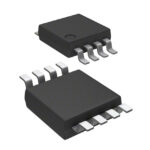 LV51130T-TLM-E

The activity of extra discounts on wholesale prices is in full swing…
Please fill in your contact information and we will send you the latest wholesale price list.




