 ChipApex | Global Electronic Components Supplier

SEARCH
Search Product
Search Post
— IC芯片 | 连接器 | 传感器 | 被动器件 —
Search productSearch post
— IC芯片 | 连接器 | 传感器 | 被动器件 —
Consult the customer manager about the wholesale price.
consultation hotline:86-132-6715-2157
email:[email protected]
Contact the product manager for consultation. One-stop consultation is available.
Do you want a lower wholesale price? Please send us your inquiry and we will reply immediately.
The LV8105W-MPB-E is a Bi-CMOS predriver IC designed for variable speed control of three-phase brushless DC motors. It operates within a supply voltage range of 16 V to 28 V and features a built-in charge pump circuit to drive external high- and low-side n-channel power FETs. The device supports PWM drive and synchronous rectifying systems for high-efficiency operation. Key integrated functions include a speed discriminator with a built-in VCO, Hall bias switching, short braking capabilities, and comprehensive protection circuits such as current limiting and lock detection.
Verify component authenticity through authorized onsemi distributors or certified partners. Confirm the specific MPB-E suffix matches design requirements, as package variations exist within the family. Check for RoHS compliance documentation and material composition declarations. Ensure storage conditions adhere to semiconductor handling standards to prevent moisture sensitivity issues prior to assembly.
Select this component when designing three-phase BLDC motor drivers requiring integrated predriver functionality with built-in charge pumps. It is suitable for applications needing precise speed control via Hall sensor inputs and robust protection features. Consider the SQFP-48 package constraints and thermal dissipation requirements for the specific PCB layout. Validate compatibility with the target power FET gate drive characteristics.
This part belongs to the LV8105W series of Bi-CMOS predrivers from onsemi, specialized for brushless motor applications. The series provides solutions for efficient motor control with integrated logic and power interface capabilities. The MPB-E variant denotes a specific package configuration within this product line, sharing core functional architecture with other suffixes while differing in physical housing.
The LV8105W-TLM-E is a confirmed substitute within the same family, offering identical electrical functionality but potentially differing in package type. Verify pinout compatibility and thermal performance before substitution. Other variants may share the core predriver architecture but require validation of specific interface and packaging differences.
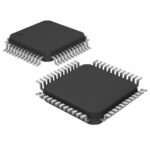 LV8105W-MPB-E

The activity of extra discounts on wholesale prices is in full swing…
Please fill in your contact information and we will send you the latest wholesale price list.





