ChipApex | Global Electronic Components Supplier

SEARCH
Search Product
Search Post
— IC芯片 | 连接器 | 传感器 | 被动器件 —
Search productSearch post
— IC芯片 | 连接器 | 传感器 | 被动器件 —
Consult the customer manager about the wholesale price.
consultation hotline:86-132-6715-2157
email:[email protected]
Contact the product manager for consultation. One-stop consultation is available.
Do you want a lower wholesale price? Please send us your inquiry and we will reply immediately.
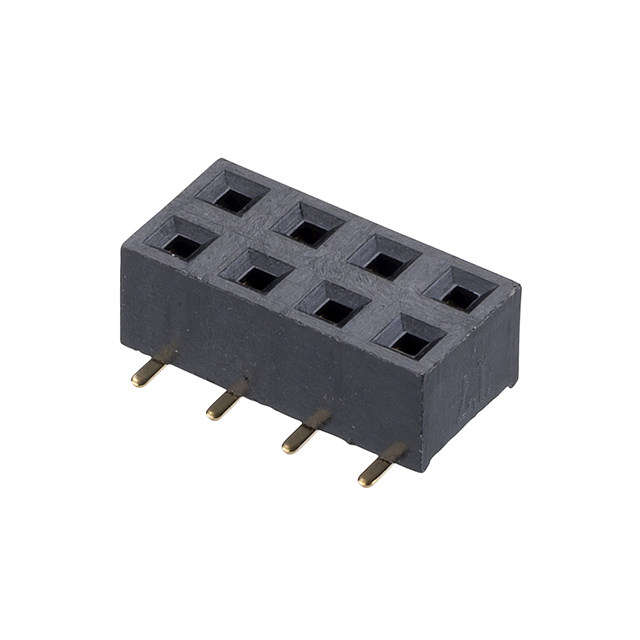
The M20-7810445 is an 8-position, double-row PCB receptacle from the Harwin M20 series. It features a 2.54 mm (0.100 inch) pitch and is designed for surface mount technology (SMT). The connector supports both top and bottom entry configurations, offering flexibility in board layout. Contacts are gold-plated to ensure reliable signal transmission. This component is part of the industrial standard M20 family, which utilizes high-temperature liquid crystal polymer (LCP) housings rated UL94V-0, allowing compatibility with standard SMT reflow processes.
Verify the specific suffix codes against official Harwin documentation to confirm exact contact plating thickness and housing color variants. Ensure that the selected variant matches the required surface mount footprint dimensions and thermal profile capabilities for your manufacturing process. Cross-reference the datasheet for precise peak reflow temperature limits to prevent component damage during assembly.
Select this component when a compact, double-row surface mount solution is required for 8-pin connections. The M20 series is suitable for applications demanding high reliability and thermal stability due to its LCP construction. Consider the top/bottom entry capability if space constraints dictate specific mating directions. Verify current ratings and voltage requirements against the specific application load before finalizing the design.
This receptacle belongs to the Harwin M20 series, a range of industrial standard connectors known for their robustness and density. The series offers various pin counts and row configurations, all sharing a common 2.54 mm pitch. These connectors are engineered for demanding environments, featuring durable materials and precise mechanical tolerances to ensure consistent performance in critical electronic systems.
Direct replacements within the M20 series include other 8-position double-row SMT receptacles such as M20-7810845, provided the entry orientation and plating specifications match. Always verify mechanical footprint compatibility and electrical ratings before substituting components to ensure system integrity.
 M20-7810445

The activity of extra discounts on wholesale prices is in full swing…
Please fill in your contact information and we will send you the latest wholesale price list.