ChipApex | Global Electronic Components Supplier
SEARCH
Search Product
Search Post
— IC芯片 | 连接器 | 传感器 | 被动器件 —
Search productSearch post
— IC芯片 | 连接器 | 传感器 | 被动器件 —
Consult the customer manager about the wholesale price.
consultation hotline:86-132-6715-2157
email:[email protected]
Contact the product manager for consultation. One-stop consultation is available.
Do you want a lower wholesale price? Please send us your inquiry and we will reply immediately.
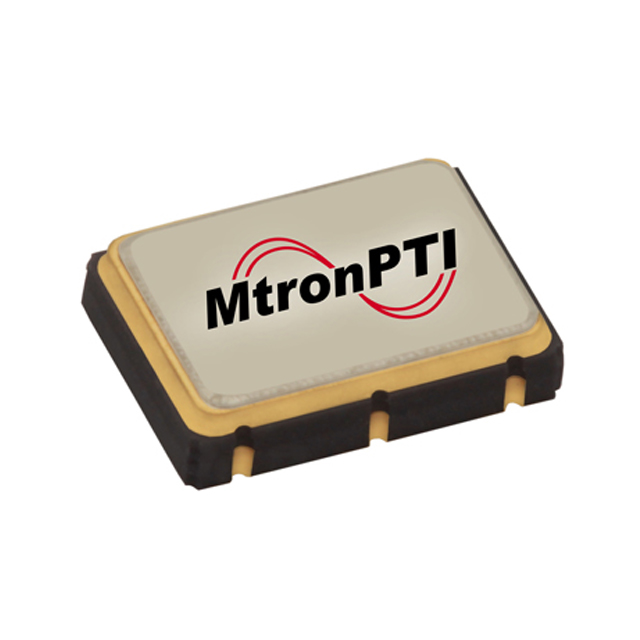
The M63002LUFCC 87.091200 is a temperature-compensated crystal oscillator (TCXO) manufactured by MtronPTI, operating at a nominal frequency of 87.0912 MHz. It features a CMOS output interface and operates on a 3.3 V supply voltage. The device utilizes a leadless ceramic package with six surface-mount terminals, measuring 5x7 mm in footprint. Designed for high stability, it incorporates internal temperature compensation to maintain frequency accuracy across varying thermal conditions.
Verify the specific frequency tolerance and aging rate requirements against your system design specifications before procurement. Confirm that the CMOS output swing levels are compatible with the receiving logic inputs. Ensure the 3.3 V supply voltage aligns with your power distribution network. Check the physical dimensions and pinout configuration to validate PCB layout compatibility. Review the manufacturer's datasheet for detailed electrical characteristics and environmental ratings.
Select this component when a stable, low-jitter clock source is required for digital applications. The TCXO technology offers better stability than standard crystal oscillators without the complexity of oven-controlled designs. Consider the CMOS output type for direct interfacing with digital logic. Evaluate the 5x7 mm package size for space-constrained board layouts. Ensure the operating temperature range meets the environmental conditions of the intended application.
This part belongs to the M63002 series of TCXOs from MtronPTI, designed for compact, high-performance timing solutions. The series typically offers various frequency options and output types to suit different system requirements. The 87.0912 MHz variant is optimized for applications needing this specific frequency reference. The leadless ceramic package is common in this series for robustness and miniaturization.
Direct replacements must match the 87.0912 MHz frequency, CMOS output, 3.3 V supply, and 5x7 mm leadless package. Verify equivalent frequency stability and aging rates. Cross-reference pinouts and electrical characteristics with the original datasheet. Ensure the substitute component meets the same environmental and reliability standards.
 M63002LUFCC 87.091200
The activity of extra discounts on wholesale prices is in full swing…
Please fill in your contact information and we will send you the latest wholesale price list.