 ChipApex | Global Electronic Components Supplier
SEARCH
Search Product
Search Post
— IC芯片 | 连接器 | 传感器 | 被动器件 —
Search productSearch post
— IC芯片 | 连接器 | 传感器 | 被动器件 —
Consult the customer manager about the wholesale price.
consultation hotline:86-132-6715-2157
email:[email protected]
Contact the product manager for consultation. One-stop consultation is available.
Do you want a lower wholesale price? Please send us your inquiry and we will reply immediately.
The MA46H203-1088 is a monolithic microwave integrated circuit (MMIC) from MACOM Technology Solutions, designed for high-frequency applications. It functions as a low-noise amplifier (LNA) operating within the Ka-band frequency range. The component utilizes gallium arsenide (GaAs) pseudomorphic high-electron-mobility transistor (pHEMT) technology to achieve superior performance metrics. Key electrical characteristics include a specified noise figure and gain flatness optimized for satellite communication systems. The device is housed in a surface-mount package suitable for automated assembly processes, ensuring reliability in demanding RF environments.
Verify the specific datasheet revision and ordering suffix when sourcing this component. Ensure compatibility with your PCB layout requirements regarding thermal management and RF grounding. Confirm that the supplier provides traceability documentation consistent with aerospace or industrial standards if required for your specific application environment.
Consider the operating frequency range and required gain specifications when evaluating this MMIC against alternative solutions. Assess the power supply voltage constraints and current consumption limits of your system architecture. Evaluate the physical footprint and pin configuration to ensure seamless integration into existing board designs without requiring significant redesign efforts.
This part belongs to MACOM's portfolio of Ka-band MMICs, which are engineered for robust performance in harsh electromagnetic environments. These components are typically used in defense and commercial satellite communications where signal integrity is critical. The series emphasizes miniaturization while maintaining high reliability standards across varying temperature conditions.
Direct replacements should be sought from MACOM's updated product lines or equivalent offerings from other qualified GaAs MMIC manufacturers. Verify that any substitute matches the pinout, footprint, and electrical specifications precisely to avoid re-validation costs.
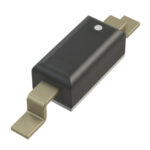 MA46H203-1088
The activity of extra discounts on wholesale prices is in full swing…
Please fill in your contact information and we will send you the latest wholesale price list.





