 ChipApex | Global Electronic Components Supplier
SEARCH
Search Product
Search Post
— IC芯片 | 连接器 | 传感器 | 被动器件 —
Search productSearch post
— IC芯片 | 连接器 | 传感器 | 被动器件 —
Consult the customer manager about the wholesale price.
consultation hotline:86-132-6715-2157
email:[email protected]
Contact the product manager for consultation. One-stop consultation is available.
Do you want a lower wholesale price? Please send us your inquiry and we will reply immediately.
The MAX11801GTC/V+ is an automotive-grade, low-power resistive touch-screen controller from Analog Devices Inc./Maxim Integrated. It operates on a single 1.7V to 3.6V supply and features a 12-bit SAR ADC with a multiplexer for interfacing with four-wire touch screens. The device supports I2C serial communication at up to 400kHz. Key capabilities include direct and autonomous operating modes, data tagging for measurement type and touch event identification, and digital preprocessing to reduce host processor load. It includes an on-chip FIFO in autonomous mode and enters low-power states automatically between conversions.
Verify the 'V+' suffix indicates lead-free/RoHS compliance and automotive qualification (-40°C to +105°C). Confirm the package is 12-pin TQFN-EP. Ensure the I2C interface requirement matches the MAX11801 variant, as SPI variants are distinct part numbers within the family.
Select the MAX11801 specifically for I2C connectivity; use MAX11800/MAX11802 for SPI. Choose the GTC/V+ suffix for extended automotive temperature ranges (-40°C to +105°C) versus the ETC+ industrial range. Consider Autonomous Mode if reducing host CPU interrupt overhead is critical, leveraging the internal FIFO.
This component belongs to the MAX11800–MAX11803 family of ultra-small resistive touch-screen controllers. The MAX11801 variant is distinguished by its I2C interface, whereas the MAX11800 and MAX11802 use SPI. All variants share similar ADC performance and power management features but differ in communication protocol and specific ordering suffixes for temperature and packaging.
Direct substitutes within the same family include MAX11800GTC/V+ (SPI interface) or MAX11803GTC/V+ (I2C interface, different pinout/functionality mapping may apply). Verify interface compatibility (I2C vs SPI) and temperature grade when replacing.
In Direct Mode, the application processor controls all touch-screen controller activity. In Autonomous Mode, the device periodically scans the touch screen for events without host intervention, using an on-chip FIFO to store results, which reduces system power consumption.
It supports data-tagging, which records the type of measurement performed (X, Y, Z1, or Z2) and the type of touch event (initial touch, continuing touch, or touch release).
The device consumes 343µW at VDD = 1.7V and 34.4ksps, and 888µW at VDD = 3.3V and 34.4ksps.
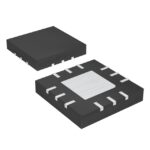 MAX11801GTC/V+
The activity of extra discounts on wholesale prices is in full swing…
Please fill in your contact information and we will send you the latest wholesale price list.




