 ChipApex | Global Electronic Components Supplier
SEARCH
Search Product
Search Post
— IC芯片 | 连接器 | 传感器 | 被动器件 —
Search productSearch post
— IC芯片 | 连接器 | 传感器 | 被动器件 —
Consult the customer manager about the wholesale price.
consultation hotline:86-132-6715-2157
email:[email protected]
Contact the product manager for consultation. One-stop consultation is available.
Do you want a lower wholesale price? Please send us your inquiry and we will reply immediately.
The MAX11803ETC+T is a low-power, ultra-small resistive touch-screen controller manufactured by Analog Devices Inc./Maxim Integrated. It operates from a single supply of 1.70V to 3.6V and features a 12-bit SAR ADC with a multiplexer for interfacing with resistive touch-screen panels. The device supports the I2C serial bus interface and includes digital preprocessing to reduce bus loading and application-processor resource requirements. It offers direct and autonomous operating modes, data tagging for measurement and touch event information, and automatic low-power mode entry between conversions.
Verify the component status as the source material indicates potential discontinuance or limited availability for this series. Confirm the package type is 12-pin TQFN (4mm x 4mm) with an exposed pad. Ensure the ordering suffix '+T' corresponds to tape and reel packaging as defined in the datasheet. Check RoHS compliance status for lead-free verification.
Select the MAX11803ETC+T when an I2C interface is required, as opposed to the SPI-based MAX11802. This part is suitable for power-sensitive handheld applications due to its low voltage operation (1.7V to 3.6V) and autonomous scanning capabilities. Consider the 12-pin TQFN package constraints for PCB layout. Verify temperature range requirements against the -40°C to +85°C specification.
The MAX11803 is part of the MAX11800–MAX11803 family of low-power touch-screen controllers. While the MAX11800/MAX11801 and MAX11802 support SPI, the MAX11801/MAX11803 specifically support the I2C serial bus. All devices in the family share similar core functionalities including 12-bit resolution, digital preprocessing, and low-power modes, but differ in interface and specific feature sets like autonomous mode availability.
Public confirmed substitute part numbers are not provided in the verified source material. The MAX11801EWC+T is listed in the same family but uses a WLP package and I2C interface. Cross-reference with other MAX118xx series parts if interface compatibility allows, but verify pinout and register compatibility independently.
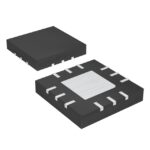 MAX11803ETC+T
The activity of extra discounts on wholesale prices is in full swing…
Please fill in your contact information and we will send you the latest wholesale price list.




