ChipApex | Global Electronic Components Supplier
SEARCH
Search Product
Search Post
— IC芯片 | 连接器 | 传感器 | 被动器件 —
Search productSearch post
— IC芯片 | 连接器 | 传感器 | 被动器件 —
Consult the customer manager about the wholesale price.
consultation hotline:86-132-6715-2157
email:[email protected]
Contact the product manager for consultation. One-stop consultation is available.
Do you want a lower wholesale price? Please send us your inquiry and we will reply immediately.
The MAX14586ETA+T is a power protection IC designed for input voltage monitoring and control. It features an overvoltage lockout (OVLO) function that disconnects the load when input exceeds safe limits, with a maximum protection voltage of +36V. The device incorporates a soft-start mechanism to limit inrush current during startup and includes a 15ms debounce timer to prevent false triggering from transient noise. It operates within a specified temperature range and is housed in a surface-mount package suitable for compact designs.
Verify the exact suffix and tape/reel specifications against the manufacturer's official datasheet before ordering. Confirm availability status as distribution channels may vary. Ensure the procurement source provides valid traceability documentation. Check for any specific handling requirements related to moisture sensitivity levels. Validate that the component matches the intended application voltage and current ratings.
Select this component when robust overvoltage protection is required for sensitive loads. Consider the OVLO threshold and hysteresis values to match the system's input voltage profile. Evaluate the soft-start timing to ensure compatibility with the power source's current capabilities. Assess the thermal performance and package size constraints for the target PCB layout. Verify compatibility with the operating temperature range of the final application environment.
This part belongs to the Maxim Integrated power protection family, now under Analog Devices Inc. It is designed for applications requiring reliable input voltage supervision. The device integrates multiple protection functions into a single small footprint, reducing bill-of-materials complexity compared to discrete solutions. It is commonly used in systems where power integrity and component safety are critical priorities.
Public confirmed substitute part numbers are not available in the provided data. Consult the manufacturer's official replacement guide or contact technical support for verified alternatives. Do not assume pin-to-pin compatibility with other PMICs without explicit datasheet confirmation.
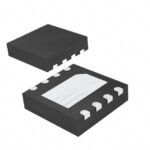 MAX14586ETA+T
The activity of extra discounts on wholesale prices is in full swing…
Please fill in your contact information and we will send you the latest wholesale price list.