 ChipApex | Global Electronic Components Supplier

SEARCH
Search Product
Search Post
— IC芯片 | 连接器 | 传感器 | 被动器件 —
Search productSearch post
— IC芯片 | 连接器 | 传感器 | 被动器件 —
Consult the customer manager about the wholesale price.
consultation hotline:86-132-6715-2157
email:[email protected]
Contact the product manager for consultation. One-stop consultation is available.
Do you want a lower wholesale price? Please send us your inquiry and we will reply immediately.
The MAX14690BEWX+T is a wearable charge management solution designed for low-power applications. It integrates a linear battery charger with smart power selection and optimized peripherals. The device features two ultra-low quiescent current buck regulators and three LDO linear regulators. It supports lithium-ion batteries, operates on a supply voltage of 2.7 V to 5.5 V, and provides output voltages ranging from 800 mV to 3.6 V. The output current capability is 200 mA. The component is housed in a WLP-36 package (2.69x2.44 mm) suitable for surface mount installation.
Verify the specific suffix 'BEWX' against official Analog Devices documentation to confirm pinout and thermal characteristics. Ensure the source document explicitly lists this part number as active or available. Check RoHS compliance status in the latest datasheet revision. Confirm the manufacturer is Analog Devices Inc./Maxim Integrated. Validate the WLP-36 package dimensions for PCB layout compatibility.
Select this component for designs requiring integrated charging and multiple regulated rails in a minimal footprint. The ultra-low quiescent currents of the integrated regulators are critical for extending battery life in standby modes. Ensure the input voltage range matches the system's power source. Verify that the 200 mA output current meets the peak load requirements of the target application.
The MAX14690 series belongs to Maxim Integrated's portfolio of power management ICs specialized for wearable technology. These solutions combine charging, power sequencing, and regulation into single chips to reduce board space. The BEWX variant specifically denotes the WLP-36 packaging option, which offers a compact form factor compared to larger QFN packages used in other variants of the same functional family.
Direct substitutes include MAX14690HEWX+T and MAX14690NEWX+T. These variants share the same core functionality but may differ in package type or specific regulatory configurations. Cross-reference the datasheet to ensure pin compatibility and electrical parameter alignment before substitution.
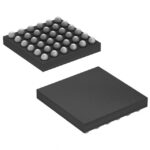 MAX14690BEWX+T

The activity of extra discounts on wholesale prices is in full swing…
Please fill in your contact information and we will send you the latest wholesale price list.





