 ChipApex | Global Electronic Components Supplier

SEARCH
Search Product
Search Post
— IC芯片 | 连接器 | 传感器 | 被动器件 —
Search productSearch post
— IC芯片 | 连接器 | 传感器 | 被动器件 —
Consult the customer manager about the wholesale price.
consultation hotline:86-132-6715-2157
email:[email protected]
Contact the product manager for consultation. One-stop consultation is available.
Do you want a lower wholesale price? Please send us your inquiry and we will reply immediately.
The MAX1586AETM+ is a high-efficiency, low-quiescent current power management IC designed for portable applications. It integrates seven output regulators within a single package: four synchronous buck converters and three low-dropout linear regulators. The device operates from an input voltage range of 2.6 V to 5.5 V. Each buck converter supports an output current of up to 500 mA with adjustable or fixed output voltages including 1.8 V and 2.5 V. The switching frequency is set at 1 MHz. The component functions reliably across an operating temperature range of -40°C to +85°C and is housed in a 48-pin TQFN-EP package.
Verify the specific suffix against official Analog Devices documentation to confirm pinout compatibility and thermal pad specifications. Confirm RoHS compliance status via the manufacturer's datasheet as supply chain variations may exist. Ensure the ordering part number matches the exact package variant required for your PCB footprint. Cross-reference the latest revision history to validate any functional updates or recommended design changes.
Select this component when designing systems that require multiple regulated voltages from a single lithium-ion or similar battery source. It is appropriate for applications needing both high-current digital logic supplies and precise analog reference voltages. Consider the 48-pin TQFN package constraints during layout planning. Evaluate the thermal performance requirements given the integrated nature of the regulators within the small form factor.
This part belongs to the MAX1586 family of Power Management ICs from Maxim Integrated, now part of Analog Devices. These components are engineered specifically for the stringent power efficiency demands of handheld computing and communication devices. The series represents a consolidation of discrete power solutions into a single integrated circuit to reduce board space and improve system reliability.
Publicly confirmed substitute part numbers include MAX1586BETM+. Verify electrical parameter alignment and package compatibility before substitution.
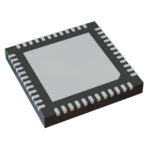 MAX1586AETM+

The activity of extra discounts on wholesale prices is in full swing…
Please fill in your contact information and we will send you the latest wholesale price list.





