 ChipApex | Global Electronic Components Supplier

SEARCH
Search Product
Search Post
— IC芯片 | 连接器 | 传感器 | 被动器件 —
Search productSearch post
— IC芯片 | 连接器 | 传感器 | 被动器件 —
Consult the customer manager about the wholesale price.
consultation hotline:86-132-6715-2157
email:[email protected]
Contact the product manager for consultation. One-stop consultation is available.
Do you want a lower wholesale price? Please send us your inquiry and we will reply immediately.
The MAX16922ATPO/V+ is a high-frequency, dual step-down DC-DC converter integrated with two low-dropout (LDO) regulators and an active-low reset controller. Designed for automotive applications, it operates within a 3.7V to 28V input voltage range and features a fixed 2.2MHz switching frequency. The device provides four output channels: two adjustable buck converters capable of delivering up to 1.2A each, and two LDOs providing 300mA and 600mA respectively. It is housed in a compact 5mm x 5mm TQFN-EP-20 package and is qualified to AEC-Q100 standards for operation between -40°C and +125°C.
Verify the specific suffix 'ATPO' against official Analog Devices documentation to confirm pinout and thermal pad configuration. Confirm AEC-Q100 grade requirements for your specific automotive application. Check current availability status as automotive PMICs may have long lead times or discontinuation notices. Ensure compatibility with your system's reset timing requirements before finalizing procurement.
Select this component when space constraints require integrating multiple power stages into a single solution. It is suitable for designs needing both high-current buck conversion and low-noise LDO outputs from a single source. Consider the 2.2MHz frequency trade-off between efficiency and passive component size. Verify that the input voltage range covers your system's transient conditions.
This part belongs to the MAX16922 family of highly integrated power management ICs designed specifically for automotive electronics. It consolidates functions typically requiring separate discrete components, reducing board area and assembly complexity. The integration of reset logic alongside power regulation simplifies system supervision design for critical automotive loads.
Check for MAX16922 variants with different packaging options such as ATPI or ATPH if the TQFN-EP-20 footprint is unsuitable. Verify if alternative packages like the thin QFN are available for height-constrained designs. Ensure any substitute maintains the same AEC-Q100 qualification level and electrical specifications.
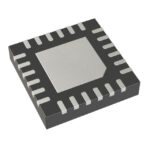 MAX16922ATPO/V+

The activity of extra discounts on wholesale prices is in full swing…
Please fill in your contact information and we will send you the latest wholesale price list.





