 ChipApex | Global Electronic Components Supplier

SEARCH
Search Product
Search Post
— IC芯片 | 连接器 | 传感器 | 被动器件 —
Search productSearch post
— IC芯片 | 连接器 | 传感器 | 被动器件 —
Consult the customer manager about the wholesale price.
consultation hotline:86-132-6715-2157
email:[email protected]
Contact the product manager for consultation. One-stop consultation is available.
Do you want a lower wholesale price? Please send us your inquiry and we will reply immediately.
The MAX16972GTEB/V+ is a 3A automotive high-speed USB protector designed for robust port protection. It integrates high-ESD and short-circuit safeguards for low-voltage internal USB data lines and the upstream host connection. The device supports Hi-Speed USB (480Mbps) and full-speed USB (12Mbps) protocols, ensuring reliable data integrity in demanding environments. Packaged in a 16-TQFN (4x4mm) surface-mount format, it operates within an extended temperature range of -40°C to +125°C. Certified to AEC-Q100 standards, this PMIC component provides essential overcurrent and transient protection for automotive connectivity systems.
Verify that the specific part number matches the required package variant, as the MAX16972 series includes different suffixes such as GTEB and BGEE which may denote distinct pin configurations or thermal characteristics. Confirm AEC-Q100 qualification status if automotive reliability is mandatory. Ensure compatibility with the target PCB footprint for the 16-TQFN package before finalizing procurement orders.
Select this component when designing automotive interfaces requiring robust protection against electrostatic discharge and short circuits on USB ports. It is suitable for applications needing support for both Hi-Speed and full-speed USB protocols. Consider the 3A current rating and extended temperature range (-40°C to +125°C) to ensure performance under harsh automotive operating conditions.
This device belongs to the MAX169xx family of specialized power management ICs focused on interface protection. Unlike general-purpose regulators, these components are engineered specifically to safeguard sensitive communication lines from electrical faults. The MAX16972 variant targets automotive-grade requirements, distinguishing itself through its ability to handle high-energy transients while maintaining signal integrity for high-speed data transfer.
The MAX16969BGEE/V+T is a related automotive USB protector offering similar protection functions but utilizes a 16-QSOP package instead of the TQFN form factor. Designers must evaluate pinout compatibility and thermal dissipation differences when substituting between these package types.
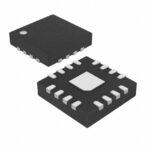 MAX16972GTEB/V+

The activity of extra discounts on wholesale prices is in full swing…
Please fill in your contact information and we will send you the latest wholesale price list.





