 ChipApex | Global Electronic Components Supplier

SEARCH
Search Product
Search Post
— IC芯片 | 连接器 | 传感器 | 被动器件 —
Search productSearch post
— IC芯片 | 连接器 | 传感器 | 被动器件 —
Consult the customer manager about the wholesale price.
consultation hotline:86-132-6715-2157
email:[email protected]
Contact the product manager for consultation. One-stop consultation is available.
Do you want a lower wholesale price? Please send us your inquiry and we will reply immediately.
The MAX17008GTI+ is a dual Quick-PWM step-down controller designed for notebook GPU core and I/O power supplies. It supports an input voltage range of 4.5V to 26V with a quiescent current of 1.7mA. The device features independent or combined operation modes, enabling flexible power delivery configurations. Packaged in a 28-TQFN format, it integrates protection mechanisms including over-current, over-voltage, and thermal shutdown. This component serves as a specialized PMIC solution for high-performance computing applications requiring efficient voltage regulation.
Verify the specific ordering suffix and package variant when sourcing replacements, as functional differences may exist between similar part numbers within the same series. Confirm RoHS compliance status and lead times through authorized distributors, noting that this component may be subject to discontinuation notices. Ensure compatibility with existing PCB layouts and thermal requirements before finalizing procurement decisions.
Select this controller for applications requiring dual-phase power delivery with precise voltage regulation. Consider the 28-TQFN package size for space-constrained designs. Evaluate the 1.7mA quiescent current specification for battery-operated devices where efficiency is critical. Ensure the input voltage range aligns with the system's power source capabilities and verify thermal management solutions for high-load scenarios.
The MAX17008GTI+ belongs to the Maxim Integrated Quick-PWM series, focusing on high-efficiency DC-DC conversion. It is categorized under professional power management ICs (PMIC) intended for complex computing environments. The device complements other power solutions by providing dedicated control for graphics and input/output subsystems, ensuring stable performance under varying load conditions.
Check for direct substitutes within the MAX17008 family or compatible dual-channel controllers from Analog Devices. Verify pinout compatibility and electrical specifications to ensure seamless integration into existing designs without redesigning the power stage.
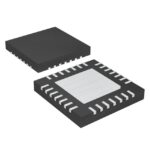 MAX17008GTI+

The activity of extra discounts on wholesale prices is in full swing…
Please fill in your contact information and we will send you the latest wholesale price list.





