 ChipApex | Global Electronic Components Supplier

SEARCH
Search Product
Search Post
— IC芯片 | 连接器 | 传感器 | 被动器件 —
Search productSearch post
— IC芯片 | 连接器 | 传感器 | 被动器件 —
Consult the customer manager about the wholesale price.
consultation hotline:86-132-6715-2157
email:[email protected]
Contact the product manager for consultation. One-stop consultation is available.
Do you want a lower wholesale price? Please send us your inquiry and we will reply immediately.
The MAX17043G-E+U is a host-side fuel gauge for single-cell lithium-ion batteries. It utilizes the ModelGauge m5 algorithm to track relative state-of-charge without requiring battery relearn cycles or external current-sense resistors. The device operates within a supply voltage range of 2.5 V to 4.5 V and features a TDFN-8 package. It supports I²C communication at speeds up to 400 kHz, with a fixed 7-bit address of 0x6D. Key electrical parameters include a maximum operating temperature of +70°C and a minimum of -20°C.
Verify the specific suffix 'E' against official Analog Devices documentation to confirm environmental rating or tape-and-reel specifications. Ensure compatibility with existing PCB footprints for the TDFN-8 package. Confirm that the I²C interface requirements align with the host microcontroller capabilities. Check for any obsolescence notices or lifecycle status updates from the manufacturer before finalizing procurement plans.
Select this component when precise state-of-charge tracking is required for single-cell lithium-ion applications without adding external sense resistors. The ModelGauge m5 technology provides accurate capacity estimation across varying charge/discharge profiles. Consider the TDFN-8 package size for space-constrained portable designs. Verify that the operating temperature range meets the specific application environment requirements.
The MAX17043 belongs to Maxim Integrated's fuel gauge family designed for portable electronics. It integrates advanced battery modeling algorithms into a compact footprint. The device simplifies system design by removing the need for complex calibration routines typically associated with coulomb counting methods. It serves as a cost-effective solution for managing battery life in consumer and industrial handheld devices.
The MAX17044 is a compatible alternative for dual-cell (2S) lithium-ion pack applications. Both devices share similar algorithmic features and communication interfaces. Ensure that the target application requires single-cell monitoring rather than dual-cell support when selecting between these variants.
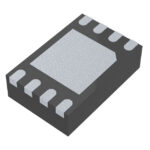 MAX17043G-E+U

The activity of extra discounts on wholesale prices is in full swing…
Please fill in your contact information and we will send you the latest wholesale price list.




