 ChipApex | Global Electronic Components Supplier

SEARCH
Search Product
Search Post
— IC芯片 | 连接器 | 传感器 | 被动器件 —
Search productSearch post
— IC芯片 | 连接器 | 传感器 | 被动器件 —
Consult the customer manager about the wholesale price.
consultation hotline:86-132-6715-2157
email:[email protected]
Contact the product manager for consultation. One-stop consultation is available.
Do you want a lower wholesale price? Please send us your inquiry and we will reply immediately.
The MAX17613BATP+T is a current limiter and system protection device from the Olympus series, manufactured by Analog Devices Inc./Maxim Integrated. It operates within a supply voltage range of 4.5V to 60V and features an integrated FET with a typical on-resistance (RON) of 130mΩ. The device provides programmable current limiting up to 3A with ±3.5% accuracy across the operating temperature range. It supports overvoltage and undervoltage protection with externally adjustable thresholds via resistors. Unlike variants A and C, the B version allows bidirectional current flow. It includes thermal shutdown protection and is housed in a compact 20-pin TQFN-EP package.
Verify the specific suffix 'T' indicates tape-and-reel packaging when ordering. Confirm the 'B' variant designation ensures bidirectional current flow compatibility with your circuit design. Ensure the 20-TQFN exposed pad footprint matches your PCB layout requirements. Validate that the 4.5V to 60V input range aligns with your system's power specifications.
Select this component for applications requiring robust system protection against voltage faults and inrush currents. Choose the MAX17613B variant specifically if reverse current flow is necessary, as opposed to the blocking A or C versions. Consider the integrated FET and low RON for space-constrained designs aiming to reduce external bill of materials. Evaluate the programmable fault response modes to match system recovery requirements.
This part belongs to the Maxim Integrated Olympus series, designed as compact and reliable integrated system protection solutions. The series offers configurable protection against overvoltage, undervoltage, and overcurrent conditions. These devices are engineered to withstand significant input voltage faults, providing a robust alternative to discrete protection circuits while minimizing board space.
Publicly confirmed substitute part numbers are not available in the provided documentation. Designers should consult official Analog Devices resources for cross-reference data.
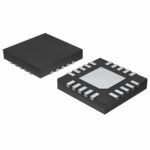 MAX17613BATP+T

The activity of extra discounts on wholesale prices is in full swing…
Please fill in your contact information and we will send you the latest wholesale price list.





