 ChipApex | Global Electronic Components Supplier

SEARCH
Search Product
Search Post
— IC芯片 | 连接器 | 传感器 | 被动器件 —
Search productSearch post
— IC芯片 | 连接器 | 传感器 | 被动器件 —
Consult the customer manager about the wholesale price.
consultation hotline:86-132-6715-2157
email:[email protected]
Contact the product manager for consultation. One-stop consultation is available.
Do you want a lower wholesale price? Please send us your inquiry and we will reply immediately.
The MAX1789EUI+T is a smart battery-pack controller featuring an embedded microcontroller platform. It integrates high-precision analog front-end circuitry for monitoring cell voltages and currents within multi-cell lithium-ion battery systems. The device supports flexible configuration through its programmable architecture, enabling accurate state-of-charge and state-of-health calculations. Designed for robust operation in demanding environments, it ensures reliable performance across the specified industrial temperature range while maintaining low power consumption during active and standby modes.
Verify component authenticity through authorized distributors or direct manufacturer channels. Confirm package integrity and absence of physical damage upon receipt. Ensure storage conditions comply with moisture sensitivity level requirements to prevent soldering defects during assembly. Cross-reference ordering information with official datasheets to confirm specific suffix variations and availability status before finalizing procurement orders.
Select this component when designing systems requiring integrated fuel-gauge functionality alongside microcontroller processing capabilities. Evaluate compatibility with existing battery chemistries and cell configurations. Consider thermal management requirements based on expected operating temperatures and load profiles. Verify interface compatibility with host processors for data communication and configuration updates.
This part belongs to the MAX1780 series of smart battery-pack controllers from Analog Devices Inc./Maxim Integrated. These components are designed to replace discrete fuel-gauge solutions by integrating essential measurement and processing functions into a single chip. The series targets applications needing compact footprints and reduced bill-of-materials complexity for portable and industrial battery systems.
Consult official substitution guides for verified alternatives within the MAX1780 family. Confirm pinout compatibility and functional equivalence before replacing. Verify that any substitute part meets the same electrical specifications and environmental ratings required by the original design.
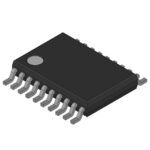 MAX1789EUI+T

The activity of extra discounts on wholesale prices is in full swing…
Please fill in your contact information and we will send you the latest wholesale price list.




