 ChipApex | Global Electronic Components Supplier

SEARCH
Search Product
Search Post
— IC芯片 | 连接器 | 传感器 | 被动器件 —
Search productSearch post
— IC芯片 | 连接器 | 传感器 | 被动器件 —
Consult the customer manager about the wholesale price.
consultation hotline:86-132-6715-2157
email:[email protected]
Contact the product manager for consultation. One-stop consultation is available.
Do you want a lower wholesale price? Please send us your inquiry and we will reply immediately.
The MAX1924VEEE+ is a lithium-ion and lithium-polymer battery pack protection controller designed for three-series cell configurations. It monitors individual cell voltages to prevent overvoltage, undervoltage, overcurrent, and short-circuit conditions. The device integrates MOSFET drivers for external P-channel MOSFETs, eliminating the need for external pull-up resistors. Key electrical parameters include a maximum input voltage of 28V, a typical operating current of 30µA, and a shutdown current of 0.8µA. Overvoltage protection thresholds are factory-programmable between 4V and 4.4V with ±0.5% accuracy, while undervoltage thresholds range from 2V to 3.2V with ±2.0% accuracy. The component operates within a temperature range of -40°C to +85°C and is housed in a 16-pin QSOP package.
Verify the specific suffix 'EEE' confirms the 16-pin QSOP package and industrial temperature rating (-40°C to +85°C). Confirm the 'V' designation corresponds to the three-cell configuration rather than four-cell variants. Check manufacturer documentation for RoHS compliance status and any recent product change notices affecting availability or specifications.
Select this component when designing protection for three-series lithium battery architectures requiring low quiescent current. Ensure the external P-channel MOSFETs selected can handle the expected load currents and voltage ratings. Verify that the application environment stays within the specified operating temperature range. Consider the factory-programmable threshold options if custom protection levels are required.
The MAX1924 series serves as a dedicated protection controller for lithium-ion and lithium-polymer batteries. It complements other Maxim Integrated power management solutions by providing critical safety functions without integrating the main power switches. This approach allows designers to optimize cost and thermal performance by selecting external MOSFETs tailored to specific current requirements.
Publicly confirmed substitute part numbers are not available in the provided documentation. Designers should consult Analog Devices official resources for current lifecycle status and potential obsolescence alternatives.
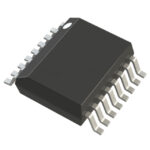 MAX1924VEEE+

The activity of extra discounts on wholesale prices is in full swing…
Please fill in your contact information and we will send you the latest wholesale price list.





