 ChipApex | Global Electronic Components Supplier

SEARCH
Search Product
Search Post
— IC芯片 | 连接器 | 传感器 | 被动器件 —
Search productSearch post
— IC芯片 | 连接器 | 传感器 | 被动器件 —
Consult the customer manager about the wholesale price.
consultation hotline:86-132-6715-2157
email:[email protected]
Contact the product manager for consultation. One-stop consultation is available.
Do you want a lower wholesale price? Please send us your inquiry and we will reply immediately.
The MAX20012ATJA/V+ is a high-reliability buck regulator integrated circuit designed for automotive applications. It features a wide input voltage range and supports adjustable output voltages to meet diverse system requirements. The device incorporates advanced protection mechanisms including overcurrent, thermal, and short-circuit protection to ensure robust operation in harsh environments. Packaged in a 32-pin TQFN with an exposed pad, it facilitates efficient heat dissipation and compact board layout.
Verify the component authenticity by checking the manufacturer's marking code and lot traceability against official Analog Devices documentation. Ensure the specific suffix matches the required temperature grade and packaging configuration. Request a Certificate of Conformance or test report from authorized distributors to confirm compliance with automotive quality standards before finalizing procurement.
Select this component when designing for automotive environments requiring high reliability and precise power management. Consider the thermal characteristics of the exposed pad package for effective heat sinking. Evaluate the input voltage range and load requirements to ensure the buck converter operates within its specified efficiency curves. Verify that the available pinout and footprint align with the target PCB design constraints.
This part belongs to the MAX20012 series of power management ICs from Maxim Integrated, now part of Analog Devices. The series focuses on providing stable, regulated power for critical automotive electronics. The ATJA/V+ designation indicates a specific package type and lead-free composition compliant with RoHS directives, distinguishing it from other variants in the family.
Consult official cross-reference lists for direct substitutes such as the MAX20012BATJJ/V+. Ensure any replacement maintains the same pin compatibility, thermal performance, and automotive qualification level. Verify that alternative components meet the same input/output specifications and protection feature sets.
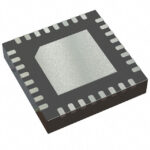 MAX20012ATJA/V+

The activity of extra discounts on wholesale prices is in full swing…
Please fill in your contact information and we will send you the latest wholesale price list.





