 ChipApex | Global Electronic Components Supplier
SEARCH
Search Product
Search Post
— IC芯片 | 连接器 | 传感器 | 被动器件 —
Search productSearch post
— IC芯片 | 连接器 | 传感器 | 被动器件 —
Consult the customer manager about the wholesale price.
consultation hotline:86-132-6715-2157
email:[email protected]
Contact the product manager for consultation. One-stop consultation is available.
Do you want a lower wholesale price? Please send us your inquiry and we will reply immediately.
The MAX20049ATED/VY+ is a flexible, compact quad power supply IC designed for automotive camera modules. It integrates two 2.2MHz, 500mA buck converters and dual low-dropout regulators (LDOs) on a single chip. The device operates with an input voltage range of 3V to 36V. It features a 17-pin FC2QFN package suitable for surface mount installation. The component supports a wide operating temperature range from -40°C to +125°C, ensuring reliability in harsh automotive environments while providing efficient power management for complex vision systems.
Verify the specific suffix VY+ against the official Analog Devices datasheet to confirm package type and tape-and-reel specifications. Ensure the order matches the exact MAX20049ATED variant. Confirm RoHS compliance status directly with the manufacturer or authorized distributors prior to procurement. Validate that the supplier provides genuine components with traceable origin to avoid counterfeit risks in automotive supply chains.
Select this component when designing automotive camera systems requiring multiple regulated rails from a single footprint. The integrated buck converters provide efficient step-down conversion for digital logic, while the LDOs offer clean power for sensitive analog sensors. Consider the 2.2MHz switching frequency for minimizing external passive component size. Evaluate thermal performance within the target enclosure, as the device handles significant current density in a small QFN package.
This part belongs to the MAX20049 family of multi-rail power management ICs developed by Maxim Integrated, now part of Analog Devices. These devices are engineered specifically to simplify the power architecture for automotive imaging solutions. By consolidating multiple regulators into one package, they reduce board space and assembly complexity compared to discrete solutions.
Check for direct pin-compatible alternatives within the MAX20049 series, such as the MAX20049ATEA/VY+, which may differ only in packaging or minor electrical characteristics. Verify functional equivalence before substitution.
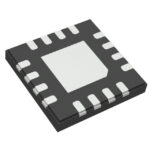 MAX20049ATED/VY+
The activity of extra discounts on wholesale prices is in full swing…
Please fill in your contact information and we will send you the latest wholesale price list.





