ChipApex | Global Electronic Components Supplier
SEARCH
Search Product
Search Post
— IC芯片 | 连接器 | 传感器 | 被动器件 —
Search productSearch post
— IC芯片 | 连接器 | 传感器 | 被动器件 —
Consult the customer manager about the wholesale price.
consultation hotline:86-132-6715-2157
email:[email protected]
Contact the product manager for consultation. One-stop consultation is available.
Do you want a lower wholesale price? Please send us your inquiry and we will reply immediately.
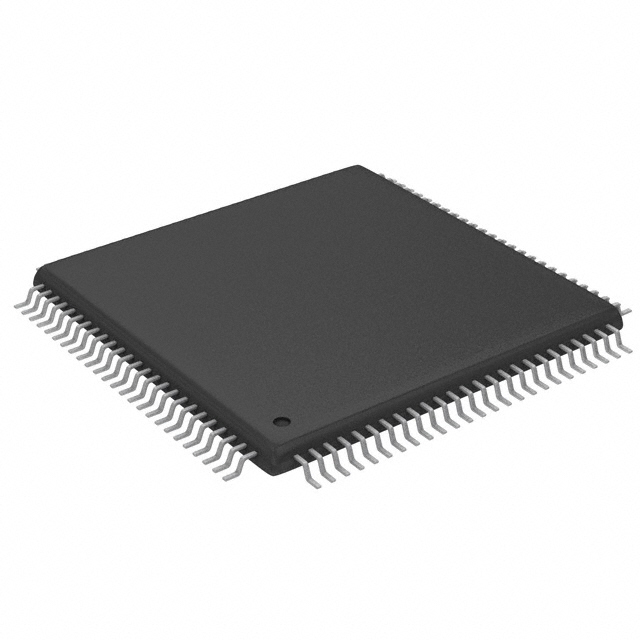
The MAX2037CCQ+ is an 8-channel variable-gain amplifier (VGA) designed for high linearity, high dynamic range, and low-noise performance in ultrasound imaging and Doppler applications. It features differential inputs and outputs with a total gain range of typically 42dB. The device offers ultra-low output-referred noise of 22nV/√Hz at 5MHz, optimized for interfacing with 12-bit ADCs. Key specifications include a maximum gain of 29.5dB, ±0.25dB absolute gain error, -70dBc HD2, and 120mW consumption per channel. It operates in a 100-TQFP-EP package.
Verify the specific suffix against official documentation, as it defines packaging and environmental compliance. Confirm current product status, as this component may be obsolete or subject to supply constraints. Ensure the supplier provides valid traceability and authenticity guarantees. Check for any recent product change notices that might affect pin compatibility or electrical characteristics relative to previous revisions.
Select this component when designing systems requiring multi-channel signal amplification with precise gain control. It is suitable for applications needing direct interfacing with 12-bit analog-to-digital converters due to its low noise and high linearity. Consider its pin compatibility with related devices like the MAX2038 if system expansion or feature variation is required. Evaluate power consumption per channel against thermal management capabilities.
This part belongs to the Maxim Integrated ultrasound variable-gain amplifier family. It shares pin compatibility with the MAX2038, which combines VGA functionality with continuous-wave Doppler beamforming. The series is engineered specifically for medical imaging requirements, offering high integration to reduce board space and simplify design complexity for transducer front-end electronics.
The MAX2038 is a pin-compatible alternative within the same family, offering combined VGA and CW Doppler beamformer functions. Verify functional equivalence regarding gain range, noise performance, and interface requirements before substitution.
 MAX2037CCQ+
The activity of extra discounts on wholesale prices is in full swing…
Please fill in your contact information and we will send you the latest wholesale price list.