 ChipApex | Global Electronic Components Supplier
SEARCH
Search Product
Search Post
— IC芯片 | 连接器 | 传感器 | 被动器件 —
Search productSearch post
— IC芯片 | 连接器 | 传感器 | 被动器件 —
Consult the customer manager about the wholesale price.
consultation hotline:86-132-6715-2157
email:[email protected]
Contact the product manager for consultation. One-stop consultation is available.
Do you want a lower wholesale price? Please send us your inquiry and we will reply immediately.
The MAX2078CTK+ is an octal-channel ultrasound front-end integrated circuit designed for portable and cart-based imaging systems. It operates within a frequency range of 900 kHz to 7.6 MHz and supports power supply voltages of 3.13 V to 3.47 V or 4.5 V to 5.25 V. The device draws operating currents of 6 mA and 11 mA depending on configuration. It features a noise figure of 3.4 dB and is housed in a 68-pin TQFN-EP package with an exposed pad. The component functions reliably across a temperature range of 0°C to +70°C.
Verify the specific suffix CTK against the manufacturer's current datasheet to confirm pinout and thermal pad specifications. Confirm RoHS compliance status through official documentation as manufacturing processes may change. Check for moisture sensitivity level requirements during storage and handling. Ensure the supplier provides valid traceability documents for medical-grade components.
Select this component when designing systems requiring multiple integrated receiver channels to reduce board space and power consumption. It is suitable for applications needing high-performance CW Doppler capabilities without external beamformers. Consider the 68-pin TQFN package constraints for thermal management and PCB layout. Evaluate the specific voltage rails available in the target system against the dual supply options.
This part belongs to the Maxim Integrated ultrasound front-end lineup, specifically engineered to replace discrete receiver solutions. It consolidates LNA, VGA, and AAF stages into a single high-density bipolar IC. The series targets the medical diagnostic market, offering a compact alternative to multi-chip architectures while maintaining signal integrity for clinical imaging standards.
Consult the official Analog Devices product selector guide for direct functional equivalents within the MAX2078 family. Verify pin compatibility before substituting with other octal-channel receivers. Cross-reference thermal dissipation characteristics if replacing with higher-power variants.
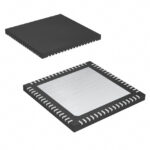 MAX2078CTK+
The activity of extra discounts on wholesale prices is in full swing…
Please fill in your contact information and we will send you the latest wholesale price list.





