 ChipApex | Global Electronic Components Supplier
SEARCH
Search Product
Search Post
— IC芯片 | 连接器 | 传感器 | 被动器件 —
Search productSearch post
— IC芯片 | 连接器 | 传感器 | 被动器件 —
Consult the customer manager about the wholesale price.
consultation hotline:86-132-6715-2157
email:[email protected]
Contact the product manager for consultation. One-stop consultation is available.
Do you want a lower wholesale price? Please send us your inquiry and we will reply immediately.
The MAX2078CTK+T is an octal-channel ultrasound front-end integrated circuit manufactured by Analog Devices Inc./Maxim Integrated. It features eight full channels optimized for low-cost, high-channel-count portable and cart-based ultrasound systems. The device integrates a low-noise amplifier (LNA), variable-gain amplifier (VGA), and anti-alias filter (AAF) to achieve an ultra-low noise figure of 2.4dB at a power dissipation of 64.8mW per channel. It supports second-harmonic imaging with -64dBFS distortion and includes programmable continuous-wave Doppler (CWD) beamformers with separate I/Q mixers. The component operates within a temperature range of 0°C to +70°C and is housed in a 68-pin thin QFN package measuring 10mm x 10mm.
Verify the specific suffix 'T' against official documentation to confirm tape-and-reel packaging status, as distributor listings may vary. Confirm RoHS compliance details directly from the manufacturer datasheet. Ensure the operating temperature range of 0°C to +70°C aligns with your system requirements. Cross-reference the 68-TQFN package dimensions with your PCB layout constraints.
Select this component when designing high-channel-count ultrasound systems requiring integrated signal conditioning. The device eliminates external components for the front-end chain, reducing board space and power consumption. Consider the 2.4dB noise figure and 64.8mW per channel power dissipation for sensitivity and thermal management planning. Verify compatibility with existing piezoelectric transducer impedances.
The MAX2078 belongs to Maxim Integrated's lineup of highly integrated ultrasound front-end solutions. It is designed to replace discrete amplifier and filter stages, simplifying the design of 2D, pulsed-wave (PW), and continuous-wave Doppler (CWD) imaging systems. The integration allows for significant reductions in system size and power while maintaining high-performance imaging capabilities comparable to larger, multi-board architectures.
The MAX2078 achieves an ultra-low noise figure of 2.4dB when RS = RIN = 200Ω.
Yes, it includes a fully integrated programmable CWD beamformer with separate I/Q mixers for each channel to ensure optimal sensitivity in high-clutter environments.
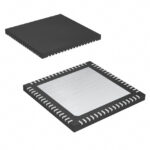 MAX2078CTK+T
The activity of extra discounts on wholesale prices is in full swing…
Please fill in your contact information and we will send you the latest wholesale price list.







