 ChipApex | Global Electronic Components Supplier

SEARCH
Search Product
Search Post
— IC芯片 | 连接器 | 传感器 | 被动器件 —
Search productSearch post
— IC芯片 | 连接器 | 传感器 | 被动器件 —
Consult the customer manager about the wholesale price.
consultation hotline:86-132-6715-2157
email:[email protected]
Contact the product manager for consultation. One-stop consultation is available.
Do you want a lower wholesale price? Please send us your inquiry and we will reply immediately.
The MAX22211ATJ+T is a dual H-bridge motor driver designed for driving two brushed DC motors or one stepper motor. It operates with a supply voltage range of 4.5V to 36V and supports peak currents up to 3.8A per bridge. The device integrates precise current regulation, thermal shutdown, and overcurrent protection. It utilizes a STEP/DIR interface with an internal 128-step microstepping divider for smooth motion control. Packaged in a TJ (WQFN) format, it is optimized for high efficiency and low heat generation in compact motor control applications.
Verify the specific suffix 'ATJ' against the manufacturer's official datasheet to confirm package type and temperature grade. Ensure compatibility with the required PCB footprint for the WQFN package. Confirm availability status as distribution channels may vary by region. Cross-reference pinouts with existing designs to prevent integration errors during procurement.
Select this component when dual independent motor control or single stepper drive is required within a 36V system. It is suitable for applications demanding high peak current capability with integrated thermal management. Consider the STEP/DIR interface requirements and ensure the host controller can support the necessary microstepping resolution. Evaluate thermal performance based on the specific PCB layout and ambient operating conditions.
This part belongs to the MAX22210/MAX22211 family of high-current motor drivers from Analog Devices/Maxim Integrated. These devices are engineered for robust performance in automotive and industrial environments. The family shares core functionalities such as integrated current sensing and advanced microstepping capabilities, differing primarily in packaging options and specific configuration variants to suit diverse form factor constraints.
The MAX22210AUI+T is a related variant within the same product family offering similar electrical specifications but potentially in a different package. Verify pin-to-pin compatibility and thermal characteristics before substitution. Consult the official replacement guide for any functional differences between package types.
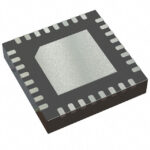 MAX22211ATJ+T

The activity of extra discounts on wholesale prices is in full swing…
Please fill in your contact information and we will send you the latest wholesale price list.





