 ChipApex | Global Electronic Components Supplier

SEARCH
Search Product
Search Post
— IC芯片 | 连接器 | 传感器 | 被动器件 —
Search productSearch post
— IC芯片 | 连接器 | 传感器 | 被动器件 —
Consult the customer manager about the wholesale price.
consultation hotline:86-132-6715-2157
email:[email protected]
Contact the product manager for consultation. One-stop consultation is available.
Do you want a lower wholesale price? Please send us your inquiry and we will reply immediately.
The MAX222IN is a dual RS-232 line driver and receiver integrated circuit manufactured by Texas Instruments. It operates from a single +5V supply, eliminating the need for external negative voltage rails typically required by standard RS-232 interfaces. The device features two drivers and two receivers with data rates up to 120 kbps. Key electrical parameters include a maximum supply voltage of 5.5 V, an operating supply current of 15 mA, and a propagation delay of 40 µs. It supports EIA/TIA-232E and V.28/V.24 standards and is housed in a 16-pin PDIP package.
Verify the manufacturer marking on the component body to distinguish between original Texas Instruments production and potential third-party sources. Confirm the package type matches the required PCB footprint, specifically the 16-pin PDIP configuration. Check for any specific suffix variations that may indicate temperature range or packaging differences, ensuring compatibility with existing design specifications before procurement.
Select this component when designing systems limited to a single +5V power rail. It is suitable for applications needing two full-duplex channels at moderate speeds. Compare against the MAX232 family if higher pin counts or additional drivers are needed. Ensure the operating temperature range meets the environmental requirements of the final assembly, as commercial grades differ from industrial variants.
The MAX222 belongs to the broader MAX220–MAX249 family of multichannel RS-232 transceivers. This series was originally developed by Maxim Integrated and later acquired by Texas Instruments. These devices are designed to replace older dual-supply solutions, simplifying power management in portable and battery-operated equipment while maintaining robust signal integrity over standard serial cables.
Direct substitutes include the MAX232IDR and MAX232IN for similar dual-channel functionality. The MAX223C-D offers five receivers but requires shutdown control verification. Always confirm pin-to-pin compatibility and electrical parameter alignment before swapping components in an existing design.
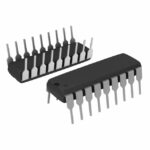 MAX222IN

The activity of extra discounts on wholesale prices is in full swing…
Please fill in your contact information and we will send you the latest wholesale price list.





