 ChipApex | Global Electronic Components Supplier

SEARCH
Search Product
Search Post
— IC芯片 | 连接器 | 传感器 | 被动器件 —
Search productSearch post
— IC芯片 | 连接器 | 传感器 | 被动器件 —
Consult the customer manager about the wholesale price.
consultation hotline:86-132-6715-2157
email:[email protected]
Contact the product manager for consultation. One-stop consultation is available.
Do you want a lower wholesale price? Please send us your inquiry and we will reply immediately.
The MAX22501EAUA+ is a half-duplex RS-485/RS-422 transceiver optimized for high-speed communication over long cables. It operates with a supply voltage range of 3V to 5.5V and supports data rates up to 100Mbps. The device features integrated hot-swap protection and fail-safe receiver functionality, ensuring a logic-high output when inputs are shorted or open for longer than 10μs. It lacks the preemphasis circuitry found in the MAX22500E variant. The component is housed in an 8-pin μMAX package and operates within an ambient temperature range of -40°C to +125°C.
Verify the specific ordering suffix against official documentation to confirm package type and RoHS compliance status. Confirm availability through authorized Analog Devices distributors as stock levels fluctuate. Ensure the selected variant matches the required interface logic voltage requirements for the target application design.
Select this model when preemphasis is not required, distinguishing it from the MAX22500E series. Verify that the 8-pin μMAX package meets the board layout constraints. Ensure the system operates within the specified 3V to 5.5V supply range and requires half-duplex communication capabilities.
This component belongs to the MAX2250xE family of ESD-protected RS-485/RS-422 transceivers designed for robust industrial communication. It shares core features like hot-swap protection and fail-safe operation with the MAX22500E but omits the preemphasis circuitry. The EAUA+ designation specifically identifies the 8-pin μMAX package configuration.
The MAX22500EATB+ serves as a functional alternative if preemphasis capability is desired, though it utilizes a different TDFN package. Direct pin-compatible replacements within the same package style require consulting current manufacturer substitution lists for verified equivalents.
No, the MAX22501E operates without preemphasis. This feature is exclusive to the MAX22500E variant.
The receiver guarantees a logic-high output on RO when the differential input signals (A and B) are shorted or open for longer than 10μs.
Internal pulldown/pullup circuits hold the DE input low and RE input high for at least 10μs upon power-up to prevent unwanted driver activation during board insertion.
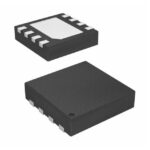 MAX22501EAUA+

The activity of extra discounts on wholesale prices is in full swing…
Please fill in your contact information and we will send you the latest wholesale price list.






