 ChipApex | Global Electronic Components Supplier

SEARCH
Search Product
Search Post
— IC芯片 | 连接器 | 传感器 | 被动器件 —
Search productSearch post
— IC芯片 | 连接器 | 传感器 | 被动器件 —
Consult the customer manager about the wholesale price.
consultation hotline:86-132-6715-2157
email:[email protected]
Contact the product manager for consultation. One-stop consultation is available.
Do you want a lower wholesale price? Please send us your inquiry and we will reply immediately.
The MAX232EIPWR is a dual RS-232 transceiver manufactured by Texas Instruments, designed for EIA/TIA-232-F and V.28/V.24 communications. It integrates two drivers and two receivers within a single SOIC-16 package. The device operates on a single 5V supply with an internal charge pump to generate the necessary voltages for RS-232 signaling. It supports data rates up to 120 kb/s and functions within an industrial temperature range of -40°C to +85°C. The component draws approximately 10 mA of supply current and features full-duplex operation without a shutdown mode.
Verify the specific suffix IPWR against official Texas Instruments documentation to confirm the tape-and-reel packaging format and industrial temperature grade. Ensure compatibility with existing PCB footprints for the SOIC-16 package. Confirm that the component meets all relevant regulatory standards required for the target deployment environment before finalizing procurement orders.
Select this component when an industrial temperature range (-40°C to +85°C) is required for RS-232 interfacing. Compare performance metrics such as data rate limits and supply current against commercial variants if cost optimization is critical. Ensure the design accommodates the external capacitors required for the internal charge pump circuit as specified in the datasheet schematics.
This part belongs to the MAX232 family of dual RS-232 transceivers produced by Texas Instruments. It shares functional similarities with other variants like the MAX232DR but differs in packaging and temperature rating. The family is widely recognized for its simplicity in converting TTL/CMOS logic levels to RS-232 compatible signals for legacy serial communication applications.
The MAX232IDWR is a documented alternative offering similar electrical characteristics in a SOIC-16 package. Verify pinout compatibility and thermal specifications before substitution. Other family members may require evaluation of their specific temperature ranges and packaging formats to ensure they meet the original design constraints.
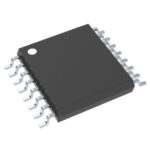 MAX232EIPWR

The activity of extra discounts on wholesale prices is in full swing…
Please fill in your contact information and we will send you the latest wholesale price list.





