 ChipApex | Global Electronic Components Supplier
SEARCH
Search Product
Search Post
— IC芯片 | 连接器 | 传感器 | 被动器件 —
Search productSearch post
— IC芯片 | 连接器 | 传感器 | 被动器件 —
Consult the customer manager about the wholesale price.
consultation hotline:86-132-6715-2157
email:[email protected]
Contact the product manager for consultation. One-stop consultation is available.
Do you want a lower wholesale price? Please send us your inquiry and we will reply immediately.
The MAX25249ATPL/VY+ is a high-voltage, ASIL-B certified camera power management integrated circuit (PMIC) designed for automotive applications. It features four regulated outputs: three synchronous buck converters and one low-dropout regulator (LDO). The device operates with an input voltage range of 5V to 36V and supports a switching frequency of 2.2MHz. Output configurations include one high-current buck channel capable of delivering up to 1A at voltages between 3V and 5V, and two additional buck channels providing up to 1.2A each within the 0.8V to 3.9875V range. The component is housed in a 20-WETQFN package with wettable flanks, ensuring reliable surface-mount assembly.
Verify the specific suffix 'PL' against the manufacturer's official datasheet to confirm output configuration and pinout compatibility. Ensure the selected variant meets the required ASIL-B integrity level for your target application. Confirm that the 20-WETQFN package dimensions align with your PCB footprint requirements before finalizing procurement.
Select this component when designing for automotive cameras requiring ASIL-B compliance and high input voltage tolerance. Compare the MAX25249ATPL/VY+ with other variants in the MAX25249 family to ensure the specific output current ratings and voltage ranges match the sensor requirements. Consider the thermal performance of the exposed pad package under maximum load conditions.
This part belongs to the MAX25249 family of mini PMICs developed by Maxim Integrated, now part of Analog Devices Inc. These devices are specifically engineered to reduce board space while providing robust power management for automotive imaging sensors. The family includes various output configurations tailored for different camera module architectures.
Direct substitutes within the same family include MAX25249ATPC/VY+, MAX25249BATPA/VY+, and MAX25249BATPF/VY+. Verify that the alternative variant offers identical output specifications and pinout compatibility to ensure seamless integration without redesigning the power stage.
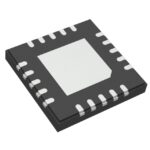 MAX25249ATPL/VY+
The activity of extra discounts on wholesale prices is in full swing…
Please fill in your contact information and we will send you the latest wholesale price list.





