 ChipApex | Global Electronic Components Supplier
SEARCH
Search Product
Search Post
— IC芯片 | 连接器 | 传感器 | 被动器件 —
Search productSearch post
— IC芯片 | 连接器 | 传感器 | 被动器件 —
Consult the customer manager about the wholesale price.
consultation hotline:86-132-6715-2157
email:[email protected]
Contact the product manager for consultation. One-stop consultation is available.
Do you want a lower wholesale price? Please send us your inquiry and we will reply immediately.
The MAX25249ATPN/VY+ is a high-voltage, ASIL-B qualified mini Power Management IC (PMIC) designed for automotive camera sensors. It integrates four outputs: three synchronous buck converters and one low-dropout linear regulator (LDO). The device operates with an input voltage range of 4.5 V to 36 V. Output 1 provides 1 A current capability with a voltage range of 3 V to 4 V in 50 mV steps. Outputs 2 and 3 deliver up to 1.2 A each, adjustable from 0.8 V to 3.9875 V. The switching frequency is fixed at 2.2 MHz. It is housed in a 20-pin WETQFN package rated for -40°C to 125°C.
Verify the specific suffix 'PN' against the official datasheet to confirm pinout and thermal pad configuration. Ensure the ASIL-B designation aligns with your system's safety integrity level requirements. Confirm RoHS3 compliance status for environmental regulations. Check for available EDA models for PCB layout validation prior to procurement.
Select this component when designing for automotive cameras requiring integrated buck and LDO regulation within a small form factor. The 2.2 MHz switching frequency allows for smaller external passive components compared to lower-frequency alternatives. Verify that the 1 A and 1.2 A output currents meet the peak load demands of the target image sensor. Consider the 36 V maximum input rating for systems with potential load dump conditions.
This part belongs to the MAX25249 family of mini PMICs developed by Analog Devices/Maxim Integrated. It is specifically engineered for high-reliability automotive environments. The family includes variants such as the MAX25249BATPF/VY+, which may differ in output configurations or input voltage specifications. These devices address the trend toward integrating multiple power rails into single packages to save board space in compact automotive modules.
Publicly confirmed substitute part numbers are not available in the provided documentation. Evaluate the MAX25249BATPF/VY+ only if its specific output topology matches the design requirements, noting potential differences in input voltage ranges or output current capabilities.
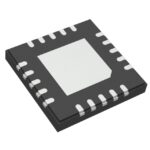 MAX25249ATPN/VY+
The activity of extra discounts on wholesale prices is in full swing…
Please fill in your contact information and we will send you the latest wholesale price list.





