 ChipApex | Global Electronic Components Supplier
SEARCH
Search Product
Search Post
— IC芯片 | 连接器 | 传感器 | 被动器件 —
Search productSearch post
— IC芯片 | 连接器 | 传感器 | 被动器件 —
Consult the customer manager about the wholesale price.
consultation hotline:86-132-6715-2157
email:[email protected]
Contact the product manager for consultation. One-stop consultation is available.
Do you want a lower wholesale price? Please send us your inquiry and we will reply immediately.
The MAX25249ATPS/VY+ is a high-voltage, ASIL-B certified camera PMIC designed for automotive applications. It integrates four synchronous buck converters and one low-dropout regulator (LDO) within a compact 20-pin WETQFN package. The device supports an input voltage range of 4.5 V to 36 V, accommodating standard automotive electrical systems. Output voltages are adjustable from 800 mV to 3.9875 V, with specific channels providing up to 1 A or 1.2 A current capabilities. Operating reliably across a temperature range of -40°C to +125°C, it meets AEC-Q100 standards for robustness in demanding environments.
Verify the exact suffix against official Analog Devices documentation, as variations such as TPS, ATPC, or BATPE indicate distinct pinouts or thermal characteristics. Confirm availability status directly with authorized distributors, as automotive-grade components often experience allocation constraints. Ensure the selected variant matches the required packaging format and moisture sensitivity level for the intended assembly process.
Select this component when designing automotive vision systems requiring integrated power sequencing and fault protection. Evaluate the specific output current requirements of the image sensor and ISP to ensure the internal regulators meet load demands. Consider the thermal performance of the WETQFN package relative to the PCB copper area and ambient operating conditions to maintain reliability under continuous load.
This part belongs to the MAX25249 family of specialized power management ICs developed for automotive camera applications. It complements other Maxim Integrated solutions by providing a consolidated power stage that reduces board space and component count. The series is engineered to support the evolving power needs of modern automotive imaging sensors while maintaining strict electromagnetic interference limits.
Publicly confirmed substitute part numbers are not available in the provided source material. Verify compatibility with existing designs before considering alternative PMICs from the same manufacturer or competitors.
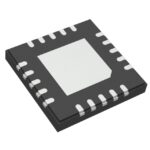 MAX25249ATPS/VY+
The activity of extra discounts on wholesale prices is in full swing…
Please fill in your contact information and we will send you the latest wholesale price list.





