 ChipApex | Global Electronic Components Supplier
SEARCH
Search Product
Search Post
— IC芯片 | 连接器 | 传感器 | 被动器件 —
Search productSearch post
— IC芯片 | 连接器 | 传感器 | 被动器件 —
Consult the customer manager about the wholesale price.
consultation hotline:86-132-6715-2157
email:[email protected]
Contact the product manager for consultation. One-stop consultation is available.
Do you want a lower wholesale price? Please send us your inquiry and we will reply immediately.
The MAX25249BATPE/VY+T is a four-output mini PMIC designed for automotive camera applications, compliant with ASIL-B safety ratings. It integrates three synchronous step-down DC-DC converters and one low-noise LDO. The device operates from an input voltage range of 4.5V to 36V. Output 1 provides up to 1A at 3V to 5V. Outputs 2 and 3 deliver up to 1.2A each within a 0.8V to 3.9875V adjustable range. Output 4 is a dedicated LDO for imager power. The IC utilizes a 2.2MHz fixed-frequency PWM switching topology and is housed in a 20-WETQFN package.
Verify the specific suffix 'BATPE' against official Analog Devices documentation to confirm the exact output configuration and voltage settings. Ensure the component meets ASIL-B requirements for your target automotive application. Confirm availability status directly with authorized distributors as supply conditions may vary. Validate that the 20-WETQFN package dimensions align with your PCB layout constraints before finalizing procurement.
Select this component when designing power systems for automotive imaging sensors requiring ASIL-B compliance. The integrated topology reduces external component count compared to discrete solutions. Consider the 2.2MHz switching frequency for noise immunity and smaller passive sizes. Verify that the input voltage range supports your system's power source, such as PoC or car battery rails. Evaluate the current capabilities of OUT2 and OUT3 for serializer and MCU secondary rail requirements.
This part belongs to the MAX25249/MAX25249B family of mini PMICs specifically engineered for camera applications. The series combines multiple power functions into a single small footprint to address size constraints in modern vehicle vision systems. These devices are rated for operation across the -40°C to +125°C automotive temperature range and adhere to AEC-Q100 standards.
Consult the official datasheet for confirmed substitute part numbers within the MAX25249 family. Verify functional equivalence regarding ASIL-B certification and output configurations before substitution.
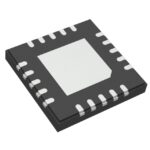 MAX25249BATPE/VY+T
The activity of extra discounts on wholesale prices is in full swing…
Please fill in your contact information and we will send you the latest wholesale price list.





