 ChipApex | Global Electronic Components Supplier
SEARCH
Search Product
Search Post
— IC芯片 | 连接器 | 传感器 | 被动器件 —
Search productSearch post
— IC芯片 | 连接器 | 传感器 | 被动器件 —
Consult the customer manager about the wholesale price.
consultation hotline:86-132-6715-2157
email:[email protected]
Contact the product manager for consultation. One-stop consultation is available.
Do you want a lower wholesale price? Please send us your inquiry and we will reply immediately.
The MAX260ACWG+ is a microprocessor-programmable universal active filter from the MAX260 series, manufactured by Analog Devices Inc./Maxim Integrated. It features two second-order switched-capacitor sections housed in a 24-pin Wide SOIC package. The device supports ±5V and single +5V operation with a center frequency range of 7.5kHz. It provides 64-step center frequency control and 128-step Q control via a digital interface. The A-grade accuracy guarantees a clock-to-center-frequency ratio error of ±1%. Operating temperature ranges from 0°C to +70°C.
Verify component authenticity through authorized distributors or direct manufacturer channels. Confirm the specific ACWG suffix indicates the commercial temperature range and Wide SOIC package. Check for RoHS compliance documentation as required by local regulations. Ensure supply chain stability given potential end-of-life status for older Maxim Integrated products.
Select this component when precise, software-adjustable filter characteristics are required without external tuning components. Compare against MAX261 and MAX262 if higher center frequencies up to 57kHz or 140kHz are needed. Consider the MAX260's superior DC offset specifications for low-frequency applications where auto-zero circuitry benefits performance. Verify power supply requirements match the ±5V or single +5V design constraints.
This part belongs to the MAX260/MAX261/MAX262 family of microprocessor-programmable universal active filters. These devices utilize CMOS technology to provide dual second-order sections within a single IC. The MAX260 variant specifically focuses on lower frequency applications with enhanced DC accuracy compared to its higher-frequency counterparts.
Direct functional substitutes include the MAX261AEWG+ and MAX262ACWG+ for higher frequency requirements. For pin-compatible alternatives with similar switching capabilities, consider the MAX263 or MAX264 series. Verify that any replacement maintains the required 24-pin package and programming interface compatibility.
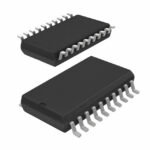 MAX260ACWG+
The activity of extra discounts on wholesale prices is in full swing…
Please fill in your contact information and we will send you the latest wholesale price list.





