 ChipApex | Global Electronic Components Supplier
SEARCH
Search Product
Search Post
— IC芯片 | 连接器 | 传感器 | 被动器件 —
Search productSearch post
— IC芯片 | 连接器 | 传感器 | 被动器件 —
Consult the customer manager about the wholesale price.
consultation hotline:86-132-6715-2157
email:[email protected]
Contact the product manager for consultation. One-stop consultation is available.
Do you want a lower wholesale price? Please send us your inquiry and we will reply immediately.
The MAX261BCWG is a microprocessor-programmable universal active filter manufactured by Analog Devices Inc./Maxim Integrated. It features two second-order switched-capacitor sections housed in a 24-pin Wide SO package. The device supports center frequencies up to 57kHz and operates with single +5V or ±5V supplies. Key electrical parameters include a typical power supply current of 20mA at ±5V, a gain bandwidth product of 2.5MHz, and a slew rate of 6V/µs. It provides 64-step center frequency control and 128-step Q control via a digital interface.
Verify the specific suffix BCWG corresponds to the commercial temperature range (0°C to +70°C) and Wide SO package as documented in the ordering information. Confirm that the component meets the required accuracy grade for the intended application, noting that B-grade devices have a guaranteed clock-to-f0 ratio error of 2%. Ensure compatibility with existing PCB footprints for the 24-pin wide small outline package.
Select the MAX261BCWG when center frequencies up to 57kHz are required, distinguishing it from the MAX260 which has lower bandwidth but superior DC specifications. Choose this part over the MAX262 if operation below 140kHz is sufficient and higher clock-to-f0 ratios are preferred for better continuous filter approximation. Verify that the system can provide the necessary clock frequencies and digital interface signals for programming.
The MAX261 is part of the MAX260/MAX261/MAX262 family of microprocessor-programmable universal active filters. This series allows for precise filter function realization without external components. The MAX261 specifically bridges the gap between the low-frequency, high-DC-accuracy MAX260 and the high-frequency MAX262, offering a center frequency range extending to 57kHz.
Direct substitutes within the same package and pinout include the MAX260BCWG and MAX262BCWG, though their frequency ranges and DC characteristics differ. Other Maxim integrated filters such as the MAX263 or MAX264 offer similar functionality but may require different programming approaches or lack the microprocessor interface.
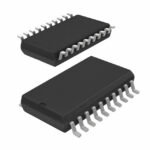 MAX261BCWG
The activity of extra discounts on wholesale prices is in full swing…
Please fill in your contact information and we will send you the latest wholesale price list.





