 ChipApex | Global Electronic Components Supplier
SEARCH
Search Product
Search Post
— IC芯片 | 连接器 | 传感器 | 被动器件 —
Search productSearch post
— IC芯片 | 连接器 | 传感器 | 被动器件 —
Consult the customer manager about the wholesale price.
consultation hotline:86-132-6715-2157
email:[email protected]
Contact the product manager for consultation. One-stop consultation is available.
Do you want a lower wholesale price? Please send us your inquiry and we will reply immediately.
The MAX2624EUA is a monolithic voltage-controlled oscillator (VCO) from the MAX2622/MAX2623/MAX2624 series, designed for RF applications. It operates at a center frequency of 972.5 MHz with a supply voltage range of 2.7 V to 5.5 V. The device features a tuning voltage range of 0.4 V to 2.4 V DC and draws a maximum current of 11.5 mA. Key performance metrics include an output power of -3 dBm, second harmonic suppression of -27 dBc, and phase noise of -101 dBc/Hz. It utilizes a UMAX-8 surface-mount package.
Verify component authenticity through authorized distributors or direct manufacturer channels due to potential availability constraints. Confirm RoHS compliance status and specific ordering suffixes such as +T for tape-and-reel packaging if required. Ensure the procurement source provides valid traceability documentation. Check for any regional distribution restrictions that may affect immediate availability. Validate that the received part matches the exact MAX2624EUA specification sheet parameters.
Select this VCO when a fixed center frequency near 972.5 MHz is required with minimal external components. Consider the UMAX-8 package for space-constrained surface-mount designs. Evaluate the 11.5 mA current consumption against system power budgets. Ensure the tuning voltage range aligns with available control circuitry. Compare phase noise and harmonic performance against application requirements for signal purity.
The MAX2624EUA belongs to a family of self-contained VCOs including the MAX2622 and MAX2623. These devices share similar architectural features but differ in center frequency specifications. The MAX2624 specifically targets the ~972.5 MHz band. This series simplifies RF design by integrating necessary oscillation and buffering functions into a single small-footprint component, reducing board space and complexity compared to discrete solutions.
The MAX2622EUA and MAX2623EUA are related parts within the same series but operate at different center frequencies. Verify frequency compatibility before substitution. No direct pin-to-pin equivalent with identical electrical characteristics is confirmed in public data. Consult official replacement guides for obsolete part numbers.
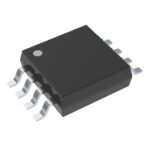 MAX2624EUA
The activity of extra discounts on wholesale prices is in full swing…
Please fill in your contact information and we will send you the latest wholesale price list.





