 ChipApex | Global Electronic Components Supplier
SEARCH
Search Product
Search Post
— IC芯片 | 连接器 | 传感器 | 被动器件 —
Search productSearch post
— IC芯片 | 连接器 | 传感器 | 被动器件 —
Consult the customer manager about the wholesale price.
consultation hotline:86-132-6715-2157
email:[email protected]
Contact the product manager for consultation. One-stop consultation is available.
Do you want a lower wholesale price? Please send us your inquiry and we will reply immediately.
The MAX262BEWG+ is a CMOS dual second-order universal switched-capacitor active filter from Analog Devices Inc./Maxim Integrated. It features two independent filter sections with microprocessor-controllable center frequency (f0) and quality factor (Q). The device supports bandpass, lowpass, highpass, notch, and allpass configurations without external components. It operates on single +5V or ±5V supplies. The MAX262 extends the center frequency range to 140kHz using lower clock-to-f0 ratios compared to the MAX260/MAX261. It includes 6-bit f0 programming for 64-step control and 7-bit Q programming for 128-step control. The BEWG suffix indicates an extended temperature range (-40°C to +85°C) in a Wide SOIC package.
Verify the ordering suffix BEWG corresponds to the required extended temperature range (-40°C to +85°C) and Wide SOIC package. Confirm that the specific grade (A or B) matches the required clock-to-f0 ratio accuracy specifications. Ensure the supplier provides documentation confirming the component is lead-free and RoHS compliant as indicated by the '+' suffix.
Select the MAX262 over MAX260/MAX261 when higher center frequencies up to 140kHz are required. Note that the MAX262 uses lower sampling ratios, which may result in greater deviation from ideal continuous filter parameters compared to the MAX260. Use Maxim's filter design software to compensate for these deviations if necessary. Verify that the available clock frequencies support the desired f0 range within the specified mode constraints.
The MAX262 is part of the MAX260/MAX261/MAX262 family of microprocessor-programmable universal active filters. While the MAX260 offers superior DC offset characteristics and the MAX261 covers mid-range frequencies, the MAX262 is optimized for higher bandwidth applications up to 140kHz. All devices share the same pinout and programming interface, allowing for flexible design upgrades based on frequency requirements.
Direct functional substitutes include the MAX260 and MAX261, though they offer different center frequency ranges and DC performance characteristics. The MAX263 and MAX264 are pin-programmable alternatives but lack the microprocessor interface. Verify compatibility with existing clock sources and control logic when substituting.
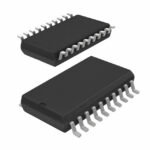 MAX262BEWG+
The activity of extra discounts on wholesale prices is in full swing…
Please fill in your contact information and we will send you the latest wholesale price list.






