 ChipApex | Global Electronic Components Supplier
SEARCH
Search Product
Search Post
— IC芯片 | 连接器 | 传感器 | 被动器件 —
Search productSearch post
— IC芯片 | 连接器 | 传感器 | 被动器件 —
Consult the customer manager about the wholesale price.
consultation hotline:86-132-6715-2157
email:[email protected]
Contact the product manager for consultation. One-stop consultation is available.
Do you want a lower wholesale price? Please send us your inquiry and we will reply immediately.
The MAX292CSA+ is an 8th-order, lowpass, switched-capacitor filter in the MAX291 series. It provides a Bessel response with a clock-to-corner frequency ratio of 100:1 and a maximum corner frequency of 25kHz. The device operates on single +4.75V to +11V or dual ±2.375V to ±5.5V supplies. It features an internal oscillator requiring only an external capacitor, or accepts an external clock signal. An uncommitted operational amplifier is included for post-filtering or anti-aliasing tasks.
Verify the component against official Analog Devices documentation to confirm the specific package type and temperature rating. Ensure that the ordering suffix matches the required industrial specifications. Cross-reference the manufacturer part number with authorized distributors to validate authenticity and current availability status before procurement.
Select this component when a maximally flat phase response and rapid settling are required for multiplexed signal paths. Verify that the application requires a fixed 8th-order Bessel characteristic rather than a Butterworth response. Confirm that the system can provide a stable clock signal within the specified voltage levels for optimal performance.
This component belongs to the MAX291/MAX292/MAX295/MAX296 family of 8th-order lowpass switched-capacitor filters. The MAX292 variant specifically implements a Bessel response, distinguishing it from the MAX291's Butterworth response. All members share similar pinouts and operating principles but differ in their frequency response characteristics and maximum corner frequencies.
The MAX291CSA+ serves as a functional substitute if a Butterworth response is acceptable instead of the Bessel response. Other variants within the MAX291 series may be considered based on specific temperature ranges or package requirements.
The MAX292 provides a Bessel response characterized by linear phase shift and fast settling, whereas the MAX291 offers a Butterworth response with a maximally flat passband.
The corner frequency is set by the clock frequency applied to the CLK pin, utilizing a 100:1 clock-to-corner frequency ratio for the MAX292.
Yes, an external capacitor connected to the CLK pin generates the internal clock signal, eliminating the need for an external clock source.
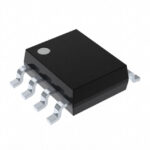 MAX292CSA+
The activity of extra discounts on wholesale prices is in full swing…
Please fill in your contact information and we will send you the latest wholesale price list.





