 ChipApex | Global Electronic Components Supplier
SEARCH
Search Product
Search Post
— IC芯片 | 连接器 | 传感器 | 被动器件 —
Search productSearch post
— IC芯片 | 连接器 | 传感器 | 被动器件 —
Consult the customer manager about the wholesale price.
consultation hotline:86-132-6715-2157
email:[email protected]
Contact the product manager for consultation. One-stop consultation is available.
Do you want a lower wholesale price? Please send us your inquiry and we will reply immediately.
The MAX293CWE+ is an active filter manufactured by Analog Devices Inc./Maxim Integrated, classified under the product category of Active Filters. It functions as a low-pass elliptic switched-capacitor filter with an eighth-order configuration. The device supports a cutoff frequency range from 0.1 Hz to 25 kHz and operates on a single channel. Electrical specifications include a minimum supply voltage of 4.75 V and a maximum of 11 V, with a typical operating voltage of 5 V. The component is housed in a SOIC-16 package and is designed for surface-mount installation. It operates within a temperature range of 0°C to +70°C.
Verify current availability status as the component may be subject to limited supply or end-of-life transitions. Confirm that the specific suffix matches the required package and temperature grade. Ensure compliance with RoHS directives if applicable to your manufacturing standards. Cross-reference the manufacturer datasheet for any recent updates regarding pinout or electrical tolerances before finalizing procurement decisions.
Choose this component when a high-order elliptic response is necessary for superior stopband attenuation. Consider the switched-capacitor nature which requires a clock input; ensure your system provides a stable clock source compatible with the desired cutoff frequency. Evaluate the power supply constraints against the specified 4.75 V to 11 V operational range to guarantee reliable performance under all expected load conditions.
This part belongs to the MAX292/MAX293 family of switched-capacitor filters. While the MAX292 offers a Bessel response, the MAX293 specifically provides an elliptic response, making it distinct for applications demanding sharper transition bands. Both share similar pinouts and operational principles but differ in their frequency response characteristics, allowing designers to select based on phase linearity versus stopband rejection needs.
Public confirmed substitute part numbers are not available in the provided documentation. Designers should consult official replacement guides or contact the manufacturer directly for qualified alternatives due to potential lifecycle changes.
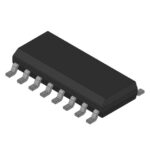 MAX293CWE
The activity of extra discounts on wholesale prices is in full swing…
Please fill in your contact information and we will send you the latest wholesale price list.





