 ChipApex | Global Electronic Components Supplier

SEARCH
Search Product
Search Post
— IC芯片 | 连接器 | 传感器 | 被动器件 —
Search productSearch post
— IC芯片 | 连接器 | 传感器 | 被动器件 —
Consult the customer manager about the wholesale price.
consultation hotline:86-132-6715-2157
email:[email protected]
Contact the product manager for consultation. One-stop consultation is available.
Do you want a lower wholesale price? Please send us your inquiry and we will reply immediately.
The MAX3033ECSE+T is a quad RS-422 transmitter manufactured by Analog Devices/Maxim Integrated, designed for digital data transmission over twisted-pair balanced lines. It operates within a supply voltage range of 3V to 3.6V with a typical static current consumption below 100µA. The device supports a maximum data rate of 2Mbps and features slew-rate limiting to minimize electromagnetic interference. It includes ±15kV ESD protection on outputs and hot-swap capability to prevent false transitions during power-up. The component is housed in a 16-pin Narrow SO package and functions within an operating temperature range of 0°C to +70°C.
Verify the specific suffix 'CSE' confirms the commercial temperature range (0°C to +70°C) and Narrow SOIC-16 package configuration. Ensure the '+T' designation aligns with required reel packaging specifications. Cross-reference the manufacturer's latest datasheet revision to confirm pinout compatibility with legacy 26LS31 or SN75174 standards before finalizing procurement orders.
Select this component when a 2Mbps baud rate with controlled slew rates is required to reduce signal reflections on improperly terminated cables. Choose this part over the 20Mbps variants if minimizing electromagnetic interference is a priority. Verify that the commercial temperature range meets system requirements, as industrial grade options are available in the same family.
This device belongs to the MAX3030E–MAX3033E family of quad RS-422 transmitters. It serves as a low-power, ESD-protected upgrade to industry-standard drivers like the 26LS31 and SN75174. The MAX3033E specifically differentiates itself by offering a guaranteed 2Mbps data rate with slew-rate control, contrasting with the 20Mbps speed of other family members.
Direct pin-compatible replacements include MAX3030E, MAX3031E, MAX3032E, and their respective industrial grade counterparts. Note that MAX3030E and MAX3032E operate at 20Mbps, while MAX3031E also offers 2Mbps but may have different enable pin configurations compared to the dual-enable structure of the MAX3033E.
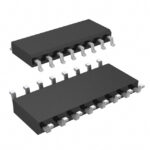 MAX3033ECSE+T

The activity of extra discounts on wholesale prices is in full swing…
Please fill in your contact information and we will send you the latest wholesale price list.





