 ChipApex | Global Electronic Components Supplier

SEARCH
Search Product
Search Post
— IC芯片 | 连接器 | 传感器 | 被动器件 —
Search productSearch post
— IC芯片 | 连接器 | 传感器 | 被动器件 —
Consult the customer manager about the wholesale price.
consultation hotline:86-132-6715-2157
email:[email protected]
Contact the product manager for consultation. One-stop consultation is available.
Do you want a lower wholesale price? Please send us your inquiry and we will reply immediately.
The MAX3033ECUE+T is a quad RS-422 transmitter operating on a single +3V to +3.6V supply, housed in a 16-pin TSSOP package with an industrial temperature range of -40°C to +85°C. It supports a guaranteed maximum data rate of 2Mbps and features slew-rate limiting to minimize electromagnetic interference. The device includes hot-swap capability for safe insertion into live backplanes and provides ±15kV ESD protection on outputs. Static supply current is less than 100µA, and the part-to-part skew is limited to 18ns.
Verify that the ordering suffix 'T' corresponds to tape-and-reel packaging as specified by the manufacturer. Confirm the 'EE' designation indicates the extended temperature range (-40°C to +85°C). Ensure the component matches the specific pinout configuration for the MAX3033E variant rather than the MAX3030E.
Select this model when a 2Mbps data rate with controlled slew rates is required to reduce signal reflections. It is appropriate for designs needing dual independent enable controls for transmitter pairs. Consider alternatives only if a higher baud rate like 20Mbps is necessary or if a global enable pin configuration is preferred over the dual-enable architecture.
This component belongs to the MAX3030E–MAX3033E family of quad RS-422 transmitters. It serves as a low-power, ESD-protected upgrade to industry-standard devices like the 26LS31 and SN75174. The MAX3033E specifically offers the 2Mbps slew-rate-limited performance within the 16-pin TSSOP form factor.
Public confirmed substitutes include MAX3030ECUE+, MAX3031ECUE+, and MAX3032ECUE+. These parts share the same package and voltage specifications but differ in data rate capabilities or enable pin configurations.
It uses internal circuitry to hold the enable inputs in a disabled state during power-up, preventing false transitions caused by leakage currents or parasitic capacitance.
Both use dual enable pins (EN1&2 and EN3&4) compatible with the SN75174 pinout, whereas the MAX3030E/MAX3031E use global enable pins compatible with the 26LS31.
No, the MAX3033E has a part-to-part skew of up to 18ns. Parallel data driving typically requires the lower skew (<5ns) found in the 20Mbps variants like the MAX3030E.
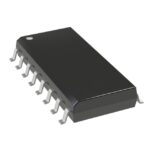 MAX3033ECUE+T

The activity of extra discounts on wholesale prices is in full swing…
Please fill in your contact information and we will send you the latest wholesale price list.





