 ChipApex | Global Electronic Components Supplier

SEARCH
Search Product
Search Post
— IC芯片 | 连接器 | 传感器 | 被动器件 —
Search productSearch post
— IC芯片 | 连接器 | 传感器 | 被动器件 —
Consult the customer manager about the wholesale price.
consultation hotline:86-132-6715-2157
email:[email protected]
Contact the product manager for consultation. One-stop consultation is available.
Do you want a lower wholesale price? Please send us your inquiry and we will reply immediately.
The MAX3033EEUE+T is a quad RS-422 transmitter manufactured by Analog Devices Inc./Maxim Integrated. It operates on a single +3V to +3.6V supply, with typical operation at +3.3V. The device provides four differential drivers compliant with TIA/EIA-422-B and ITU-T V.11 standards. It features a guaranteed maximum data rate of 2Mbps with slew-rate limiting to minimize EMI. Key electrical parameters include a static supply current of less than 100µA, a propagation delay of up to 70ns, and ±15kV Human Body Model ESD protection on all outputs. The component is housed in a 16-pin TSSOP package.
Verify that the ordering suffix '+T' corresponds to tape-and-reel packaging as specified in the manufacturer's documentation. Confirm the 'EE' designation indicates an extended temperature range of -40°C to +85°C. Ensure the component matches the specific pinout configuration for the MAX3033E variant, which utilizes dual enable inputs rather than global enable controls.
Select this component when designing systems requiring quad RS-422 transmission with strict electromagnetic compatibility constraints due to its slew-rate limitation. It is suitable for applications needing hot-swap functionality to protect against bus contention during board insertion. Verify that the system voltage remains within the 3V to 3.6V range and that the required data rate does not exceed 2Mbps.
This part belongs to the MAX3030E–MAX3033E family of quad RS-422 transmitters. It serves as a low-power, ESD-protected upgrade to industry-standard devices like the 26LS31 and SN75174. The MAX3033E specifically differs from other family members by offering a 2Mbps data rate with slew-rate control, whereas variants like the MAX3030E provide higher speeds without slew limiting.
Direct functional replacements within the same family include the MAX3031E series, which shares the 2Mbps slew-rate-limited specification. For pin-compatible upgrades to legacy designs, verify compatibility with the 26LS31 or SN75174 standards. Ensure any substitute maintains the 16-pin TSSOP footprint and supports the required operating temperature range.
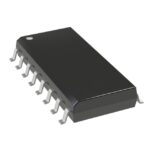 MAX3033EEUE+T

The activity of extra discounts on wholesale prices is in full swing…
Please fill in your contact information and we will send you the latest wholesale price list.





