 ChipApex | Global Electronic Components Supplier

SEARCH
Search Product
Search Post
— IC芯片 | 连接器 | 传感器 | 被动器件 —
Search productSearch post
— IC芯片 | 连接器 | 传感器 | 被动器件 —
Consult the customer manager about the wholesale price.
consultation hotline:86-132-6715-2157
email:[email protected]
Contact the product manager for consultation. One-stop consultation is available.
Do you want a lower wholesale price? Please send us your inquiry and we will reply immediately.
The MAX3054ASD is a ±80V fault-protected CAN transceiver manufactured by Analog Devices Inc./Maxim Integrated. It interfaces protocol controllers with CAN bus lines, supporting data rates up to 250kbps. The device operates within a supply voltage range of 4.75V to 5.25V and functions across an extended temperature range of -40°C to +125°C. Packaged in a 14-pin SOIC (0.154 inch width), it features full-duplex communication capability. Key electrical characteristics include a receiver hysteresis of 18mV and low-power standby modes accessible via STB and EN pins.
Verify the component authenticity by checking the manufacturer marking against official datasheet specifications. Confirm the package type matches the 14-SOIC standard. Ensure the operating temperature range aligns with system requirements. Cross-reference the part number suffix to confirm lead-free and RoHS compliance status as documented by the manufacturer.
Select the MAX3054ASD for applications requiring high-speed data transmission at 250kbps. This model is suitable where robust fault tolerance and wide operating temperature ranges are critical. Consider the pin compatibility with TJA1054 if migrating existing designs. Evaluate power consumption requirements for low-power modes using the STB and EN control pins.
The MAX3054 belongs to the MAX3054/MAX3055/MAX3056 family of CAN transceivers. While the MAX3055 supports 125kbps and the MAX3056 supports 40kbps, the MAX3054 is optimized for higher data rates. All variants share similar fault protection features and pin configurations, differing primarily in their specified maximum data rates and slew control capabilities.
The MAX3054ASD is pin and functionally compatible with the TJA1054. Designers migrating from other CAN transceivers should verify signal integrity and timing parameters to ensure seamless integration without hardware modifications.
The device detects various wiring faults such as short circuits or wire interruptions. Upon detection, it can switch to single-wire mode to maintain communication and asserts the ERR pin to indicate the fault condition.
The INH pin serves as an inhibit output used to control an external voltage regulator. It goes high during wake-up or power-on events to deactivate the regulator during sleep modes, thereby reducing overall power consumption.
While the MAX3054 is designed for 250kbps operation, the MAX3055 and MAX3056 models specifically feature built-in slope control to facilitate the use of unshielded cables. The MAX3054 relies on its receiver input filters for noise immunity.
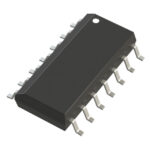 MAX3054ASD

The activity of extra discounts on wholesale prices is in full swing…
Please fill in your contact information and we will send you the latest wholesale price list.





