 ChipApex | Global Electronic Components Supplier

SEARCH
Search Product
Search Post
— IC芯片 | 连接器 | 传感器 | 被动器件 —
Search productSearch post
— IC芯片 | 连接器 | 传感器 | 被动器件 —
Consult the customer manager about the wholesale price.
consultation hotline:86-132-6715-2157
email:[email protected]
Contact the product manager for consultation. One-stop consultation is available.
Do you want a lower wholesale price? Please send us your inquiry and we will reply immediately.
The MAX3062EEKA#G16 is a half-duplex RS-485/RS-422 transceiver manufactured by Analog Devices Inc./Maxim Integrated. It integrates one driver and one receiver within an 8-pin SOT-23 package. The device supports data transmission rates up to 20Mbps with a typical supply current of 910µA at no load. It operates from a single +5V power supply across a temperature range of -40°C to +85°C. Key electrical characteristics include ±15kV Human Body Model ESD protection on the A and B pins, a fail-safe receiver threshold between -50mV and -200mV, and a shutdown mode current of 1nA.
Verify component authenticity through authorized distributors or direct manufacturer channels. Confirm the specific ordering suffix matches the required tape-and-reel packaging format. Check for RoHS compliance status as indicated in official documentation. Ensure the part number corresponds to the exact pinout and functional specifications required for the design.
Select this component for applications requiring high-speed data transfer up to 20Mbps without slew-rate limiting. It is suitable for systems needing robust ESD protection and hot-swap functionality. Consider the compact SOT-23 package for space-constrained designs. Verify that the 5V supply voltage aligns with the system power architecture.
This device belongs to the MAX3060E/MAX3061E/MAX3062E family of high-speed transceivers. While the MAX3060E and MAX3061E feature slew-rate limiting for lower speeds, the MAX3062E variant specifically omits this limitation to achieve higher data rates. All members share common features like fail-safe operation and hot-swap inputs.
MAX3062EEKA+T is a verified alternative within the same product line offering identical electrical performance and pin configuration.
The receiver input impedance is 96kΩ, which constitutes a 1/8-unit-load, allowing up to 256 devices on the bus.
It guarantees a logic-high receiver output if the differential input voltage (A-B) is greater than or equal to -50mV, covering conditions where inputs are open, shorted, or all drivers are disabled.
The DE and RE inputs incorporate internal circuitry to hold the driver disabled and receiver enabled during power-up, preventing data disturbances when inserting boards into live backplanes.
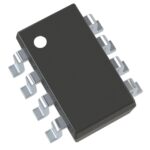 MAX3062EEKA#G16

The activity of extra discounts on wholesale prices is in full swing…
Please fill in your contact information and we will send you the latest wholesale price list.





