 ChipApex | Global Electronic Components Supplier

SEARCH
Search Product
Search Post
— IC芯片 | 连接器 | 传感器 | 被动器件 —
Search productSearch post
— IC芯片 | 连接器 | 传感器 | 被动器件 —
Consult the customer manager about the wholesale price.
consultation hotline:86-132-6715-2157
email:[email protected]
Contact the product manager for consultation. One-stop consultation is available.
Do you want a lower wholesale price? Please send us your inquiry and we will reply immediately.
The MAX3070EASD+T is a +3.3V, full-duplex RS-485 transceiver featuring one driver and one receiver in an 8-pin SO package. It operates within a supply voltage range of 3.0V to 3.6V and supports data rates up to 250kbps with reduced slew-rate drivers. The device provides ±15kV ESD protection on I/O pins and incorporates fail-safe circuitry that guarantees a logic-high receiver output when inputs are open or shorted. Hot-swap capability prevents false transitions during power-up or bus insertion. Operating temperatures range from -40°C to +125°C, with a typical supply current of 0.8mA.
Verify the specific suffix ASD indicates the 8-pin SOIC package and the E grade denotes the industrial temperature range (-40°C to +125°C). Confirm RoHS compliance status through official manufacturer documentation prior to integration. Ensure the ordering code matches the exact pinout and electrical specifications required for the target application design.
Select this component for applications requiring full-duplex communication at speeds up to 250kbps with enhanced noise immunity. The reduced slew rate makes it suitable for long cable runs where signal integrity is critical. Verify that the system operates strictly at 3.3V, as this device does not support higher voltage rails like 5V. Consider the 8-pin SO package constraints for PCB layout and thermal dissipation requirements.
This part belongs to the MAX3070E–MAX3079E family of +3.3V RS-485 transceivers manufactured by Analog Devices / Maxim Integrated. While other members of the series offer half-duplex operation or higher data rates up to 16Mbps, the MAX3070E specifically provides full-duplex functionality with fixed 250kbps slew-rate limiting. It shares common features like fail-safe and hot-swap capabilities with the broader family.
Direct functional replacements within the same family include the MAX3071E and MAX3076E, though these differ in duplex mode or slew-rate characteristics. Cross-vendor alternatives must be evaluated for pin compatibility, voltage levels, and ESD ratings. Verify that any substitute maintains the specific 250kbps data rate limit and full-duplex architecture if those parameters are critical to the design.
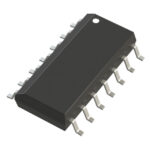 MAX3070EASD+T

The activity of extra discounts on wholesale prices is in full swing…
Please fill in your contact information and we will send you the latest wholesale price list.





